
South Florida Is Powering Florida’s Growth; The Next Decade Will Test Our Readiness
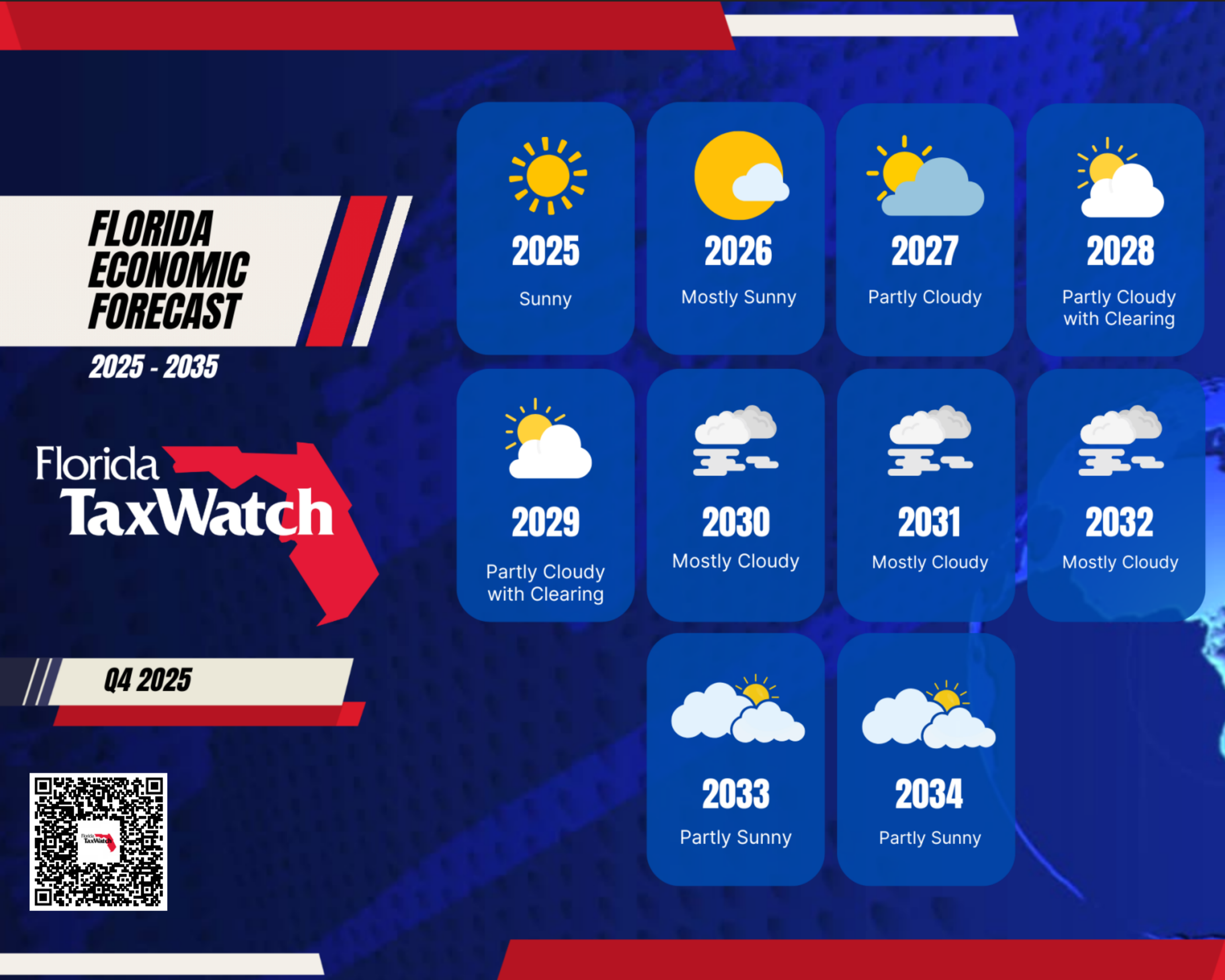
Florida’s economy is on fire and in the best way possible. With economic output reaching $1.85 trillion in Q3 2025, Florida ranked #1 in economic growth among all 50 states and Washington, D.C. That’s not just a headline - it’s a signal. A signal that Florida, and especially South Florida, has entered a defining moment of opportunity.
But the real question isn’t how fast we’ve grown. It’s whether we’re prepared to sustain that growth through 2035 and whether South Florida will lead or fall behind in shaping what comes next.
The latest economic forecast from Florida TaxWatch, developed in partnership with the Regional Economic Consulting Group, offers a clear message: Florida’s future is strong, but success will depend on how communities like ours respond to both opportunity and pressure.
And here in South Florida, those stakes are especially high.
South Florida Sits at the Center of Florida’s Growth Story
South Florida has long been a gateway connecting the United States to global markets, talent, and capital. Our region’s strength in tourism, logistics, real estate, healthcare, finance, and technology continues to fuel statewide momentum.
Tourism alone remains one of Florida’s most powerful economic drivers. In 2024, visitors spent $134.9 billion statewide, supporting 1.8 million jobs and generating nearly $80 billion in wages. Much of that economic activity flows directly through South Florida’s airports, seaports, hospitality industry, and small business ecosystem.
But tourism is only part of the picture.
Population growth continues to reshape the region. Florida’s population is projected to grow from 23.4 million residents in 2025 to nearly 26 million by 2035, an increase of about 2.6 million people. Many of those residents will land right here in South Florida, drawn by opportunity, climate, and global connectivity.
That growth creates demand - and opportunity.
Demand for housing.
Demand for infrastructure.
Demand for skilled talent.
Demand for innovation.
And demand for leadership.
Growth Without Strategy Creates Risk
While Florida remains one of the fastest-growing states in the nation, the data also reveals early warning signs, especially relevant to South Florida communities.
Housing affordability remains one of the biggest concerns. Rising property taxes, insurance costs, and housing prices are placing increasing pressure on residents and businesses alike. Surveys show that 80% of Floridians are worried about housing affordability, and nearly half have considered relocating due to rising costs.
This isn’t just a housing issue, it’s a workforce issue.
If teachers, healthcare professionals, service workers, and early-career talent cannot afford to live in South Florida, businesses will struggle to hire. If businesses struggle to hire, growth slows. If growth slows, competitiveness weakens.
That’s why economic growth must be managed and not just celebrated.
South Florida must continue investing in workforce housing, resilient infrastructure, and accessible transportation systems that support both businesses and residents.
The Workforce Opportunity - and Challenge - ahead
Employment across Florida is projected to grow significantly, increasing from 10.1 million workers in 2025 to 11.5 million by 2035. That means more jobs, more innovation, and more opportunity—but also a growing need for talent.
South Florida, in particular, faces a defining workforce moment.
Our region must expand workforce development programs, strengthen partnerships between employers and educational institutions, and create pathways that help residents move into higher-paying, future-ready careers.
Industries such as technology, cybersecurity, healthcare, logistics, advanced manufacturing, and financial services are expanding rapidly. These sectors will shape the next chapter of South Florida’s economic identity. But they cannot grow without people.
Talent is no longer just a workforce issue, it is an economic strategy.
Florida’s Growth Will Continue, But at a Slower Pace
The data shows Florida’s economic growth will remain strong, but more measured in the years ahead.
Real GDP growth is projected to reach 2.7% in 2026, gradually slowing to 1.9% by 2035. This shift reflects a transition from rapid post-pandemic growth to more sustainable, long-term expansion.
Income growth is expected to peak around 2027 before moderating through the next decade. That means Floridians will continue to see wage growth, but at a slower pace. For South Florida businesses, this signals a need to plan strategically and not reactively.
Organizations that invest in efficiency, workforce development, technology adoption, and long-term infrastructure will outperform those that rely solely on short-term momentum.
Tourism Will Remain a Pillar, But Diversification Is Key
Tourism will remain one of Florida’s most reliable economic engines. Visitor growth is expected to stabilize at approximately 3.5% annually over the next decade, providing a steady stream of economic activity. South Florida benefits enormously from this sector, but relying too heavily on any single industry introduces risk.
The next phase of South Florida’s growth must include diversification, expanding industries such as:
Technology and innovation
Healthcare and life sciences
Logistics and international trade
Cybersecurity
Advanced manufacturing
Financial services
This diversification is already underway, but it must accelerate because a diversified economy is a resilient economy.
South Florida’s Moment Requires Regional Collaboration
Perhaps the most important takeaway from this forecast is not about numbers, but about collaboration. Economic growth at this scale requires alignment between public agencies, private sector leaders, nonprofit organizations, and educational institutions.
South Florida’s tri-county region, Miami-Dade, Broward, and Palm Beach, must continue working as a connected economic ecosystem rather than isolated markets.
Infrastructure planning. Workforce development. Talent retention. Innovation investment. These challenges don’t stop at county lines and neither should our solutions. Regional collaboration will determine whether South Florida remains competitive in the global economy.
The Next Decade Will Define South Florida’s Legacy
Florida’s economy is strong, the outlook is promising and the opportunities are real, but success through 2035 will not happen automatically. It will depend on how well we address affordability, invest in talent, build infrastructure, and support business growth across industries. South Florida has always been defined by ambition and by its willingness to adapt, innovate, and lead.
Now, we are entering another defining chapter. The question is not whether Florida will grow because it will. The question is whether South Florida will be ready to lead that growth or struggle to keep pace.
For business leaders, entrepreneurs, investors, and policymakers, the message is clear:
This is not just Florida’s moment, but South Florida’s responsibility.
Download the full Florida Economic Forecast 2025 - 2035 report here.



Related Ross is expanding its Palm Beach County presence with Village Landing, a 71-acre mixed-use development planned for Wellington. The project will bring approximately 220,000 square feet of retail, more than 100,000 square feet of restaurants, 90,000 square feet of offices, and a 180-room hotel. Designed as a walkable town center, Village Landing will also feature plazas, green spaces, a village square, and a lakefront boardwalk. Construction is expected to begin in fall 2026 as Related Ross expands beyond its West Palm Beach base.