
Broward County Is Emerging As Florida’s Cybersecurity Powerhouse
Broward County isn’t easing into cybersecurity - it’s sprinting. From a military-grade training range in Davie to countywide adoption of NIST-aligned standards, the region has assembled the core ingredients of a true cyber cluster: infrastructure, policy, talent, and demand. The result is an ecosystem that not only protects South Florida’s digital backbone, but also creates high-wage jobs, attracts investment, and strengthens statewide resilience.
A Military-Grade Cyber Range
At the center of Broward’s cybersecurity surge is the Alan B. Levan | NSU Broward Center of Innovation which is a public–private partnership between Broward County and Nova Southeastern University built to accelerate tech-driven economic development. Cybersecurity is a flagship focus.
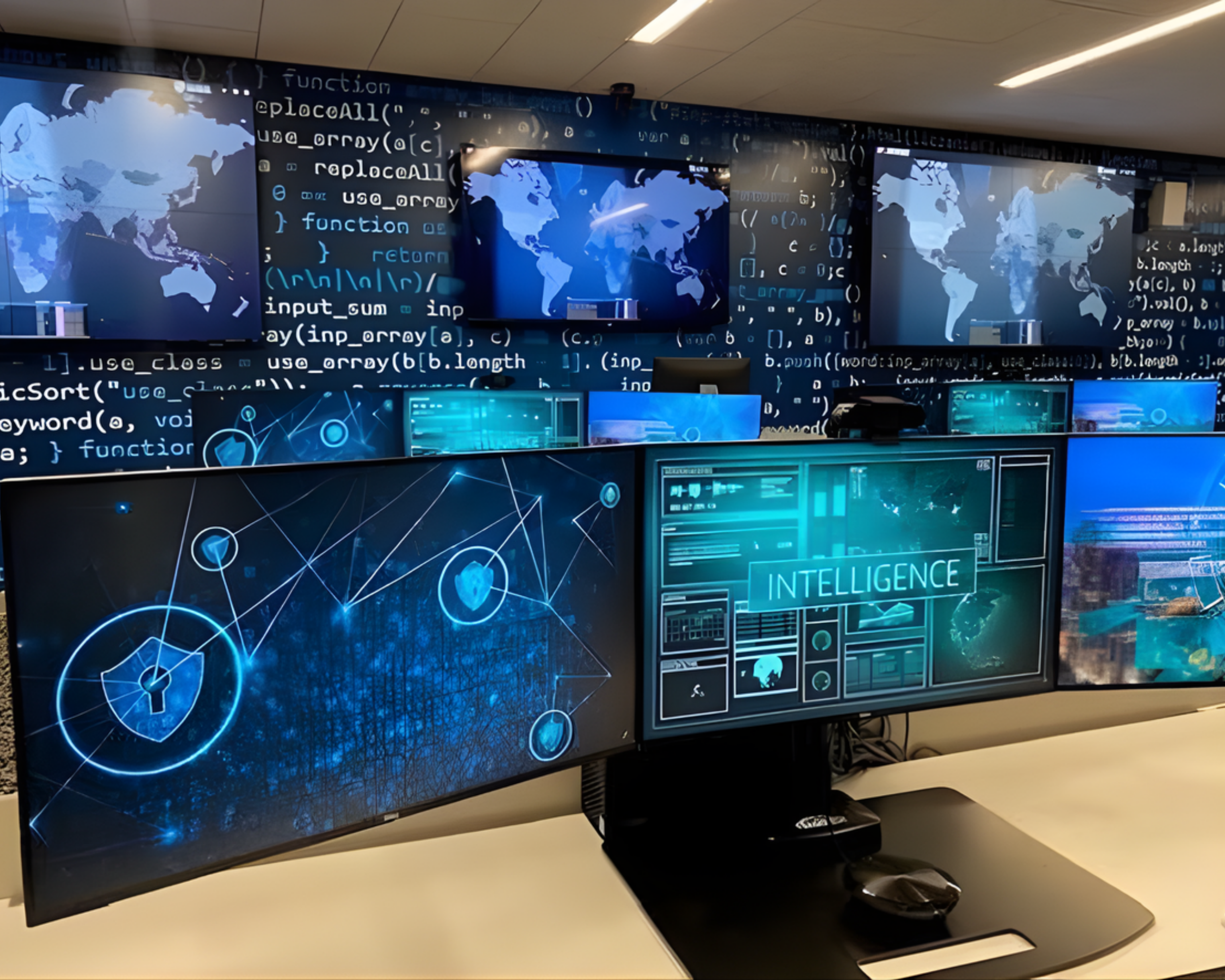
Its controlled-access cyber range spans 1,500 square feet, featuring twelve training stations (each with three monitors) supporting 24 practitioners simultaneously, plus ten observation seats and a dedicated instructor station. The facility enables hands-on training, operational continuity during severe weather, and mission-critical exercises when resilience matters most.
This is not just a classroom. Corporate teams use the range for red-team/blue-team simulations. Executives run crisis tabletop exercises. Recruiters assess technical talent under pressure. R&D and innovation teams conduct secure “skunk works” sprints. And with NSU validated by the National Security Agency as a National Center of Academic Excellence in Cybersecurity, the Levan Center is quickly becoming the region’s go-to resource.
Programming aligns directly with employer needs. The Center focuses on developing new skills, upskilling, and reskilling mapped to today’s threat surfaces: ransomware response, 5G security, IoT hardening, cloud identity, AI and data protection, and connected-vehicle risks. It’s immersive, in-person, and designed to feel like a real_security operations center.
County Government as an Enterprise-Class Operator
A world-class ecosystem requires world-class public-sector IT. Broward’s Enterprise Technology Services (ETS) provides exactly that.
Led by CIO Anthony DiLullo since March 2024, ETS oversees 165 IT professionals across five divisions: Application Services, Financial Services, IT Business Services, Infrastructure, and Project Management, operating on a $28 million budget.
The priorities are clear: cybersecurity, modernization, and organizational culture.
Under DiLullo, the county has implemented advanced threat detection, security automation, and strengthened identity and access management. The ETS DATACOM team recently completed a countywide network-segmentation initiative, isolating departments by design, reducing lateral movement, and enforcing role-based access. If a breach occurs, exposure shrinks instantly. It’s Zero Trust in practice.
Broward also adopted its first County Administration Policy for Generative AI, two years in development. The policy encourages responsible innovation while safeguarding sensitive data that is critical as the county pilots AI-driven automation to improve public services.
Looking ahead, Broward is building a platform for long-term modernization: a formal cloud-migration architecture, enterprise AI and ERP governance, and expanded security and compliance capabilities. The county’s cyber expertise is already on global display as its technologists are supporting technology and communications subcommittees for the 2026 FIFA World Cup, with significant contributions in cybersecurity and emergency operations.
NIST for Common Language
Technology alone doesn’t create a powerhouse - governance does. Florida’s Local Government Cybersecurity Act (Section 282.3185, F.S.) required large counties and municipalities to adopt cybersecurity standards consistent with best practices such as the NIST Cybersecurity Framework by January 1, 2024, and to submit attestations to the Florida Digital Service.
Broward’s Office of the Inspector General reviewed 23 local governments, the County plus 22 cities over the population threshold. By the end of the review, all 23 either certified adoption or provided documentation. A handful finalized standards after the deadline (including Fort Lauderdale, Lauderdale Lakes, Miramar, Plantation, and Pompano Beach), and several submitted attestations following OIG outreach. The point isn’t perfection - it’s convergence.
Broward’s governments now speak a shared NIST-based language of “identify → protect → detect → respond → recover.” This alignment reduces risk, improves interoperability, and simplifies vendor oversight.
Public awareness is rising alongside policy. County resources now package practical guidance and, avoiding tax scams, strengthening personal data control, hurricane-season cyber hygiene, safe travel tips that are helping residents and small firms harden their own practices. In a coastal county where storms often trigger phishing waves, education is itself critical infrastructure.
A Market That Pays And Needs Skills
Cybersecurity is fundamentally a people business, and Broward’s advantage is strong demand and strong wages. The Fort Lauderdale cybersecurity market averages around $123,000 (competitive nationally) and employers are actively hiring:
Cybersecurity Analysts
Incident Responders
Information Security Managers
Penetration Testers
Identity & Access Specialists
Cloud Security Engineers
Organizations are rapidly adopting AI-assisted detection, Zero Trust architectures, and selective blockchain uses for integrity and auditability.
Growth projections remain strong into the late 2020s. That’s why the Levan Center’s upskilling programs matter: they shorten the path for veterans, network engineers, IT administrators, and developers transitioning into cyber roles. Regional partners, such as Miami Dade College’s Cybersecurity Center of the Americas, complement Broward’s pipeline. South Florida simply needs more trained professionals and fast.
Where the Need Is Highest
Defensive operations: SOC analysts, threat hunters, incident responders
Identity and access: IAM engineers for privileged access and Zero Trust architecture
Cloud and data: Cloud security engineers for AWS/Azure/GCP, plus DLP and key management
Assurance and risk: GRC analysts, auditors, red teams, and pen testers for regulated workloads
Short-form credentials help candidates enter the field: CompTIA Security+, followed by Network+, CySA+, or a cloud certification. For mid-career professionals, vendor-tool proficiency paired with NIST or ISO-based GRC training can unlock opportunities. The cyber range ties skills together with real-world muscle memory.
Why Broward County
Broward’s rise rests on four reinforcing advantages:
1) Purpose-built infrastructure
The hurricane-hardened Levan Center stays operational when others can’t, supported by two generators and designed for continuity of operations. It’s an ideal environment for real-time exercises, backup SOC operations, and resilience training.
2) Enterprise-grade public IT
ETS’s segmentation, automation, and IAM upgrades demonstrate a government running like a modern enterprise, building trust and establishing best-practice expectations across local agencies and vendors.
3) Standardized governance
NIST alignment across the county and its municipalities creates a unified operating picture. RFPs become clearer, audits cleaner, and incident collaboration faster.
4) A job market with momentum
High wages keep talent local, training accelerates entry, and demand is diversified across government, healthcare, finance, logistics, aviation, and tourism.
These pillars attract major projects. With proximity to Miami’s finance and tech sectors, plus sustained demand from global events (FIFA), regulated industries, and corporate teams seeking realistic cyber simulations, Broward sits directly in the flow of high-impact work.
Business Impact
For local companies, Broward’s cybersecurity ecosystem transforms security from a cost center into a competitive advantage.
Realistic simulations stress-test incident response before attackers do.
Countywide standards reduce vendor friction and accelerate procurement.
Public resources improve employee awareness without added spend.
A strong talent pipeline shortens time-to-hire and increases quality.
Hurricane resilience is a defining differentiator. During peak season, organizations need continuity plans that treat cybersecurity as integral to power, payroll, and communications. The Levan Center offers a location for mock SOC operations, failover exercises, and cross-team training so staff can respond faster when it matters most.
Vendors benefit as well. Broward clearly outlines needs, cloud migration, ERP and AI governance, security and compliance advisory, automation, and providers aligned with county priorities and the GenAI policy will find engaged partners.
What’s Next
The foundation is built; the next phase is scale and specialization.
Scale means:
More cyber range cohorts
More joint exercises with hospitals, utilities, airports, and ports
More apprenticeships converting into full-time roles
Specialization means deepening in areas where South Florida has unique exposure:
Maritime and port security
Tourism, ticketing, and hospitality systems
Emergency-management communications
Hurricane-season fraud response
Aviation and logistics cybersecurity
Expect greater convergence between AI and cyber. With GenAI guardrails in place, Broward can innovate safely. In the SOC, AI can triage alerts. In governance, it can summarize control gaps. In citizen services, it can streamline requests without exposing sensitive data.
The theme is not hype. It’s disciplined experimentation inside a security-first culture.

West Palm Beach-based Ondas and Aventura-based Palantir Technologies are collaborating to launch Regna AI, a new company focused on sovereign artificial intelligence for defense and national security. Led by interim CEO Ryan Hartman, the venture will combine Palantir's AI infrastructure with Ondas' autonomous defense expertise to develop specialized AI models that organizations can control and deploy securely. The initiative emphasizes faster decision-making, data ownership, and AI capabilities for mission-critical environments. The partnership further strengthens South Florida's growing position in defense technology, artificial intelligence, and national security innovation.