

Papa Highlights a New Era: Dementia Care Is Moving Beyond the Doctor's Office and Into the Home
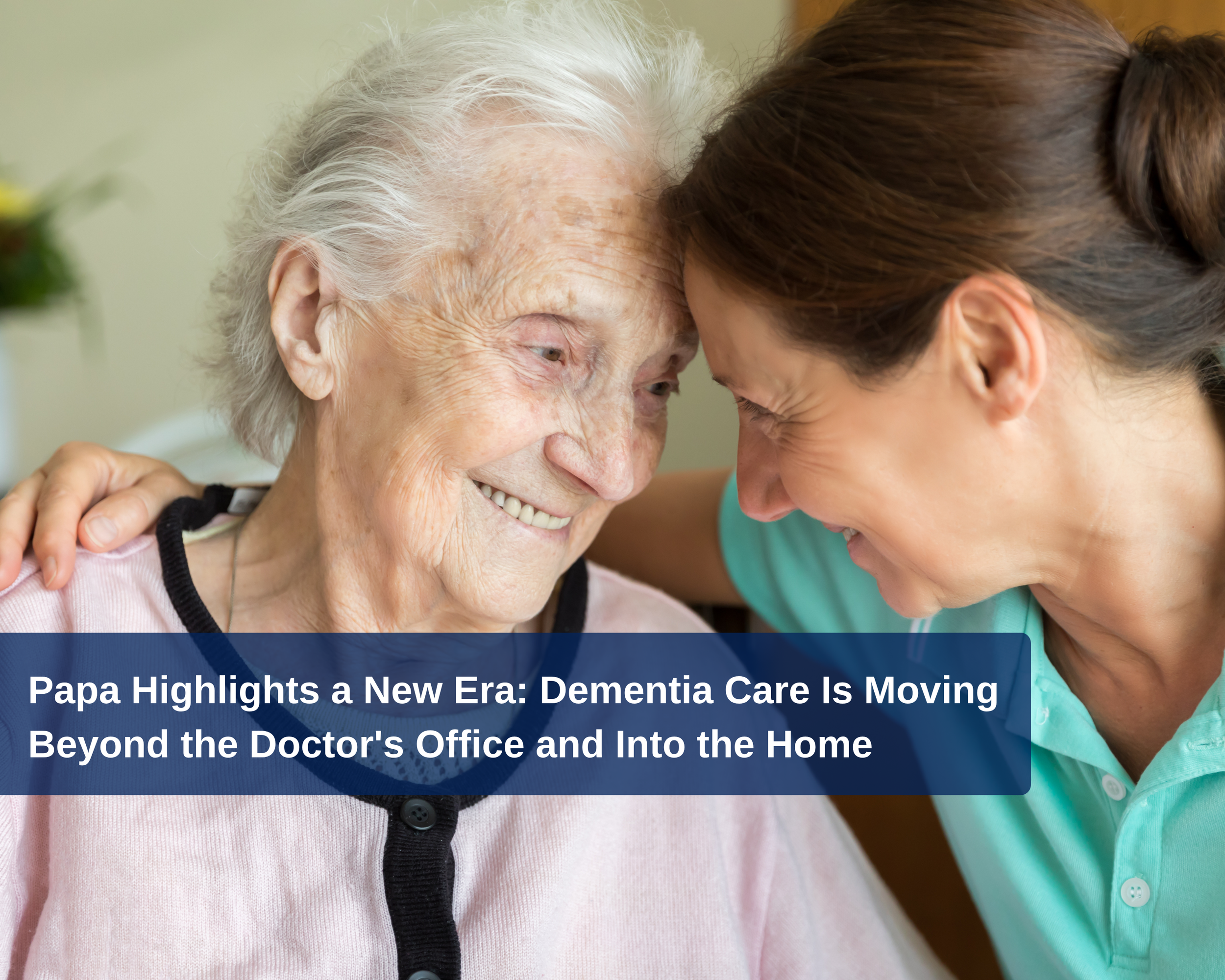
For decades, dementia care has largely revolved around physicians, hospitals, medications, and long-term care facilities. Yet anyone who has cared for a loved one with dementia knows the reality is far different.
The hardest work doesn't happen during a medical appointment.
It happens at home.
It happens at 2 a.m. when a loved one wakes up confused. It happens when a spouse gives up retirement to become a full-time caregiver. It happens when an adult child balances a career, raising children, and caring for an aging parent, all while trying to prevent another emergency room visit.
That reality is driving one of the biggest shifts in healthcare today.
Last month, in a move that reflects this broader transformation, Miami-based Papa announced new partnerships with Tembo Health and AVVACare as an Approved Partner Organization within the Centers for Medicare & Medicaid Services (CMS) Guiding an Improved Dementia Experience (GUIDE) Model.
While the announcement focuses on expanding Papa's in-home companion services, the larger story is what it represents: a national shift toward treating dementia as a condition that requires continuous support, not just clinical treatment.
A New Model for Dementia Care
The GUIDE Model is an eight-year initiative launched by CMS to test whether comprehensive, coordinated dementia care can improve outcomes for both patients and caregivers.
“Dementia care doesn’t end at the clinic. It continues around the clock at home, often carried by family members, who are doing everything they can with very little support,” said Dr. Anurag Gupta, Founder and CEO of Tembo Health, a leading provider of virtual dementia care management. “Papa brings something that clinical services simply can’t, a compassionate, consistent presence that gives families space to breathe, allowing us to provide comprehensive support to both members and their families.”
Rather than paying only for medical visits, GUIDE encourages providers to deliver personalized care plans, ongoing care coordination, caregiver education, respite services, and support that helps individuals remain safely in their homes for as long as possible.
The approach recognizes something families have understood for years: successful dementia care depends as much on supporting caregivers as it does on treating patients.
Nearly 12 million family members and unpaid caregivers provided an estimated 19.2 billion hours of dementia care in 2024 alone. As the U.S. population continues to age, those numbers are expected to rise significantly over the coming decades.
Caregiver burnout has become one of the greatest challenges facing the healthcare system, often contributing to preventable hospitalizations, earlier transitions to long-term care facilities, and declining health for caregivers themselves.
Why Human Connection Matters
Papa's role within the GUIDE Model illustrates how healthcare is expanding beyond traditional clinical services.
Through the partnerships with Tembo Health and AVVACare, Papa Pals provide in-home companionship, transportation, household assistance, and respite care, giving family caregivers valuable time to rest while also serving as another set of eyes inside the home.
Those visits can reveal changes in mobility, nutrition, social isolation, or living conditions that may otherwise go unnoticed between physician appointments.
"We see the toll that dementia places on both the individuals living with it, as well as their caregivers. They tell us every day how overwhelming this journey can be and how much difference a few hours of support makes in their ability to keep caring for their loved one," said Dr. Vinay Aggarwal, Founder and CEO of AVVACare. "Adding Papa to our network helps us give caregivers a real break and someone they can trust."
That information becomes another layer of care coordination, helping clinical teams respond before small issues become medical emergencies.
It's an example of healthcare becoming more proactive than reactive.
Technology Meets High-Touch Care
While artificial intelligence, remote monitoring, and digital health platforms continue to transform healthcare, dementia care demonstrates that technology alone isn't enough.
Companies like Tembo Health are leveraging virtual dementia specialists, care coordination, and digital tools to extend access to expert clinical care nationwide. AVVACare combines clinical navigation with personalized caregiver support while tracking measurable improvements in outcomes, including reductions in emergency department visits and hospitalizations.
Papa complements those capabilities by providing something technology cannot replace: consistent human presence.
Increasingly, the future of healthcare is not about choosing between technology and people. It is about combining both to create more complete models of care.
The Future of Aging in America
The healthcare industry is experiencing a broader shift from treating illness to supporting people where they live.
As value-based care continues to expand, providers are increasingly rewarded for improving quality of life, reducing unnecessary hospitalizations, and helping older adults remain independent longer.
That means home-based care, caregiver support, social connection, remote monitoring, and interdisciplinary care teams are becoming core components of modern healthcare—not optional services.
The GUIDE Model is one of the clearest examples of that evolution.
For innovators, investors, and healthcare organizations, it also signals where future opportunities are emerging. The next generation of aging services will likely blend clinical expertise, technology, human connection, and coordinated support into integrated care models that extend well beyond the walls of hospitals and physician offices.
“Papa was founded because my family lived this exact experience: We needed support for my grandfather, who had dementia, and my grandmother, who had dedicated herself to caring for him, and we wanted that support to feel like family, not another doctor,” said Andrew Parker, Founder and CEO of Papa.
“I started Papa to make sure no family has to navigate that journey alone and to redefine how the world ages through human connection. Our partnerships with Tembo Health and AVVACare allow us to further that commitment and our mission to age better, together.”
As America's population ages, one thing is becoming increasingly clear: the future of dementia care won't be defined solely by new medicines or medical devices.
It will be defined by how effectively we support the people providing care every single day.





West Palm Beach is exploring innovative transportation solutions as economic growth increases pressure on local infrastructure. Related Ross is advancing plans for an electric air taxi facility at CityPlace in partnership with Archer Aviation, potentially connecting major South Florida business hubs. Meanwhile, the city has launched West Palm Move, an all-electric transit network developed with Via that offers affordable fixed-route and on-demand transportation. Together, these initiatives highlight how emerging mobility technology could support South Florida's expanding business ecosystem.