The creator economy is no longer just about viral videos, social media followers or online influence. It has evolved into a multibillion-dollar business ecosystem fueled by entrepreneurs building companies around digital content, technology, media production and audience engagement. Now, the federal government is taking steps to more clearly recognize those businesses within its small-business framework.
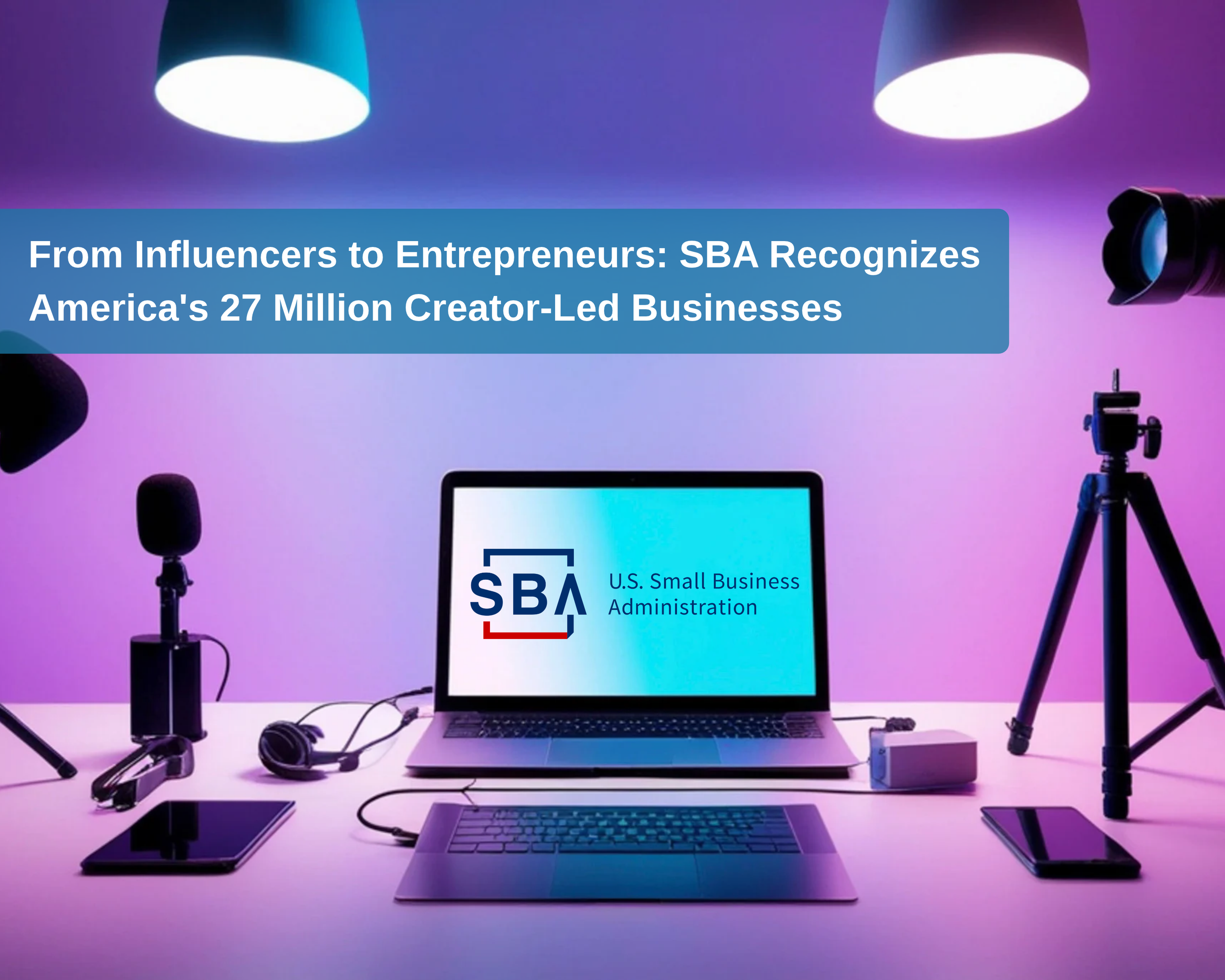
On Oct. 15, 2026, the U.S. Small Business Administration (SBA) announced new guidance formally recognizing qualifying content creators under existing federal small-business classifications, a development that could help millions of digital entrepreneurs better navigate SBA-backed financing, business development resources and federal contracting opportunities.
According to the SBA, the United States is home to approximately 27 million creator-led businesses, reflecting the continued growth of an industry that has reshaped how individuals build brands, generate revenue and launch companies.
“American’s creators are entrepreneurs who build businesses from original ideas, unique audiences, and content into thriving small businesses that create jobs,” said SBA Administrator Kelly Loeffler. “For the first time, the SBA is recognizing these enterprising content creators within our small-business framework. This historic guidance cuts through outdated classifications and gives qualifying creators greater clarity as they build businesses, create jobs, and compete and build for the future.”
The guidance clarifies that creator-led businesses whose primary activities involve producing and distributing original audiovisual content should begin with the North American Industry Classification System (NAICS) industry group 5121, Motion Picture and Video Industries, to identify the six-digit industry classification that best represents their operations.
The classification encompasses a range of business models, including video producers, podcasters, filmmakers, streamers, gaming content creators, digital publishers, social media entrepreneurs and creative agencies.
For entrepreneurs who have built businesses outside traditional corporate structures, the announcement provides greater clarity about how their operations fit within federal small-business programs.
Recognizing a New Generation of Entrepreneurs
The creator economy has fundamentally changed what it means to start and scale a business. What may begin as a podcast, YouTube channel, digital newsletter or social media account can evolve into a company employing production teams, marketing professionals, editors, designers, software developers and business development specialists.
Revenue streams increasingly extend beyond advertising and sponsorships to include subscriptions, licensing agreements, branded content, consulting, educational products and technology-enabled services. Despite that evolution, many creator-led businesses have faced challenges navigating financial and regulatory systems originally designed around more conventional industries.
The SBA's guidance seeks to address some of that uncertainty by identifying how qualifying businesses should approach federal industry classifications.
The announcement does not establish a new loan program or guarantee financing for creators. Instead, it clarifies how qualifying businesses fit within existing classifications and programs, subject to applicable eligibility requirements.
That distinction is important as the creator economy continues to mature from an emerging digital trend into an established segment of American entrepreneurship.
What This Means for Access to Capital
For many creator-led startups, access to capital remains one of the most significant barriers to growth. Unlike traditional businesses with physical storefronts, equipment or inventory, digital entrepreneurs may operate with business models built around intellectual property, online audiences, recurring sponsorship agreements and digital assets.
These models can create challenges when seeking financing, particularly when lenders evaluate revenue consistency, business history, repayment capacity and traditional collateral.
Although the SBA has long allowed eligible content creator businesses to participate in its programs, the new guidance provides clearer direction for identifying the industry classification that best reflects their primary activities. For qualifying businesses, that clarification may help simplify an early step in navigating SBA resources and discussing financing options with participating lenders. However, proper classification alone does not establish creditworthiness or guarantee loan approval.
Small Business Development Centers (SBDCs), which provide advising and educational resources to entrepreneurs, could play an important role in helping creator-led companies better understand their financial readiness and growth opportunities.
Beyond lending, the guidance also raises questions about how creator-led businesses can strengthen their financial infrastructure, diversify revenue and position themselves for long-term growth.
Business planning, financial reporting, tax preparation, intellectual property management and revenue forecasting are increasingly important considerations for founders transforming personal brands into operating companies.
South Florida's Growing Digital Entrepreneurship Ecosystem
For South Florida, the announcement intersects with a regional business environment where technology, entrepreneurship, media, entertainment and digital marketing increasingly overlap. Across Miami-Dade, Broward and Palm Beach counties, independent creators, podcast producers, digital marketing agencies and media entrepreneurs are building businesses that serve local, national and international audiences.
The region's diverse communities, international business connections, tourism economy and expanding startup ecosystem create opportunities for entrepreneurs developing digital-first business models. A creator-led startup in South Florida might generate revenue through branded video production, educational content, corporate partnerships, subscription communities or technology-driven media services.
Others may develop businesses that support the creator economy itself, including production platforms, analytics tools, marketing technology and audience engagement solutions.
For founders operating in these emerging business categories, clearer federal classification guidance could make it easier to understand which SBA programs may be relevant as they pursue expansion. But the practical impact will depend on how businesses, lenders and support organizations apply the guidance.
“We are all content creators now. Whether you’re an independent creator or a company, content is how you build an audience, earn trust and create new revenue,” stated Giovanni “Gio” Punzo, Founder & CEO, Streann Media, who has been helping businesses create and monetize content.
“The SBA’s guidance recognizes that this work is a real business, and gives qualifying creator-led companies a clearer path to credibility and capital. The next step is helping lenders understand how these businesses earn and grow.”
The perspective of entrepreneurs actively building these businesses will be especially important in determining whether federal recognition translates into meaningful improvements in access to resources.
Redefining Small Business: What's Next for the Creator Economy?
The SBA's announcement signals more than a clarification of industry classifications. It reflects a broader shift in how America defines entrepreneurship and recognizes the growing influence of digital-first businesses.
As part of its proposed revisions to small-business size standards, the SBA has received requests to establish a dedicated industry exception for content creators, potentially creating a more permanent framework for recognizing these businesses. The agency will consider those requests alongside public feedback following the Nov. 20, 2026, comment deadline. In the meantime, qualifying creators must continue to navigate existing NAICS classifications and SBA program requirements.
Today's entrepreneurs are building businesses around creativity, technology, intellectual property and digital communities, often without the traditional storefronts or business models that once defined small-business ownership. For South Florida's growing ecosystem of founders, creators and digital innovators, the opportunity lies in whether this federal recognition will translate into greater access to capital, stronger business support and new pathways for growth.
As the creator economy continues to evolve, the SBA's guidance represents another step toward aligning traditional business frameworks with a new generation of entrepreneurs. The question is no longer whether content creators are building real businesses, but how the institutions supporting American entrepreneurship will evolve to help them succeed.





The U.S. Small Business Administration has announced new guidance recognizing America's approximately 27 million creator-led businesses within its existing small-business framework. Led by SBA Administrator Kelly Loeffler, the initiative clarifies how digital entrepreneurs, including YouTubers, podcasters, streamers, and content producers, can classify their businesses when exploring federal financing and support programs. While the guidance does not guarantee funding, it could help creators better navigate SBA resources and business development opportunities. The announcement highlights the growing importance of the creator economy and its potential impact on South Florida's expanding digital entrepreneurship ecosystem.