
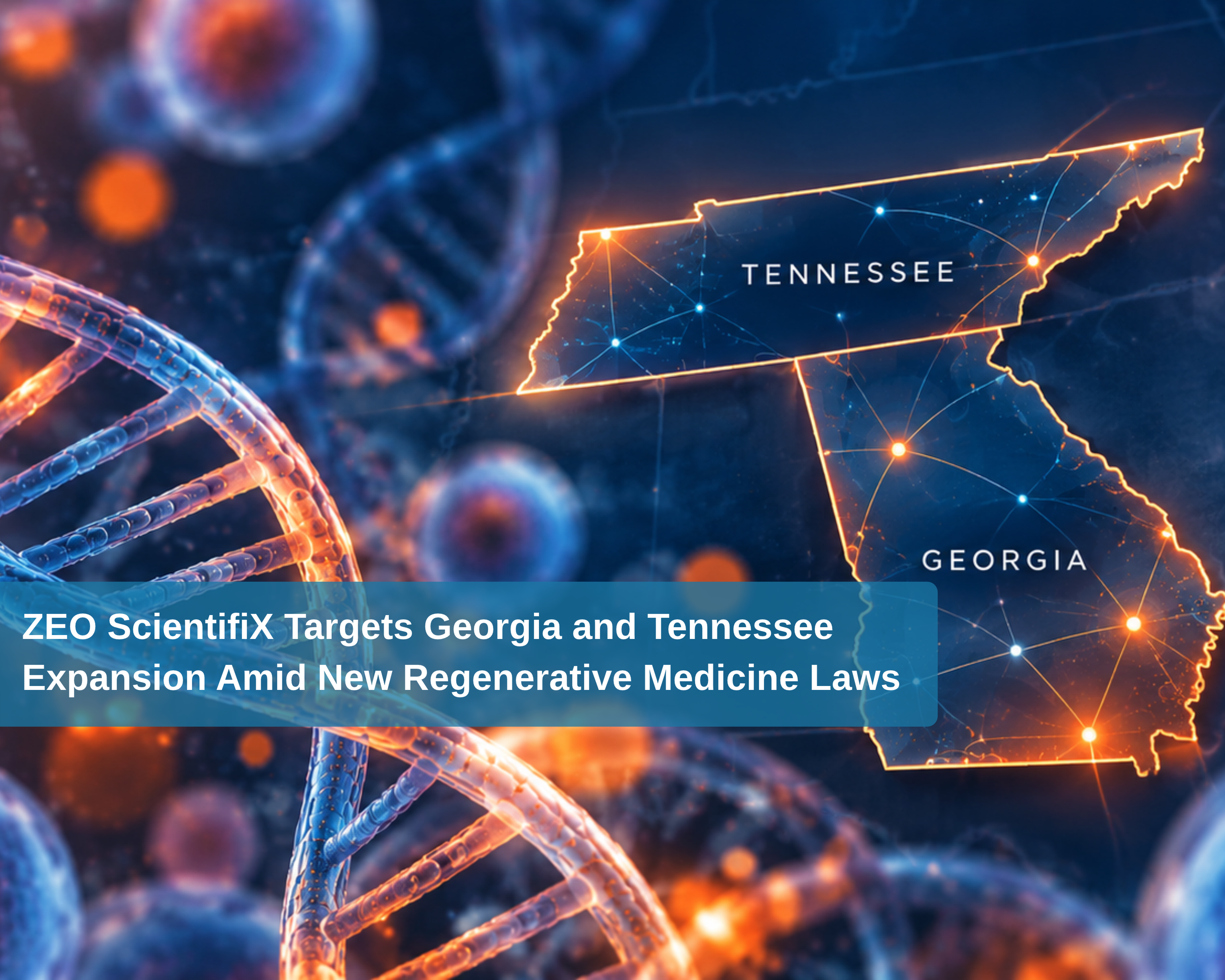
South Florida-based ZEO ScientifiX is preparing to expand its operations into Georgia and Tennessee, following newly enacted legislation in both states that establishes regulatory frameworks for certain stem cell and regenerative medicine therapies.
The company, which operates from Nova Southeastern University's Center for Collaborative Research in Davie, announced the planned expansion Sept. 15 as part of its broader strategy to build a national presence in regenerative medicine.
ZEO ScientifiX, a clinical-stage biopharmaceutical company specializing in the research, development and manufacturing of regenerative biologics, plans to expand its commercial presence and support for healthcare providers in both states. The strategy builds on its existing operations, scientific capabilities and physician relationships in Florida.
The expansion reflects a growing opportunity for biotechnology companies as states establish new rules governing access to certain regenerative therapies. It also highlights how South Florida's developing life sciences ecosystem is supporting companies pursuing markets beyond the region.
New Legislation Opens Doors for Regional Expansion
The company's expansion strategy follows the passage of Georgia House Bill 1275 and Tennessee House Bill 2246, signed into law in May 2026, with key provisions taking effect July 1.
Both laws establish requirements for certain stem cell and regenerative medicine therapies, including product sourcing, physician oversight, patient consent and safety measures. Tennessee's legislation also addresses qualifying exosome-based regenerative products, creating additional opportunities for companies working in the field.
The legislation follows Florida's 2025 passage of Senate Bill 1768, which established a framework for licensed physicians to administer certain stem cell therapies that have not received U.S. Food and Drug Administration approval, subject to specific requirements.
While these state laws create pathways for certain therapies, they do not constitute FDA approval or override applicable federal regulations.
For ZEO ScientifiX, the legislative developments present an opportunity to expand its existing Florida model into neighboring states. The company intends to support healthcare providers through physician education, scientific resources, clinical collaboration and access to regenerative biologics accompanied by appropriate quality and manufacturing documentation.
"As more states develop frameworks for responsible physician-led access, ZEO is prepared to expand alongside them," said Ian Bothwell, CEO of ZEO ScientifiX, in the company's September announcement.
Rather than approaching each state as an independent market, ZEO is developing a scalable model that can adapt as additional states introduce legislation addressing regenerative medicine.
ZEO ScientifiX and Its South Florida Roots
ZEO ScientifiX's presence in Davie is another example of a biotechnology company building its operations within South Florida's growing healthtech and life sciences ecosystem.
Operating from NSU's Center for Collaborative Research, the company focuses on regenerative biologics, an emerging area of biotechnology that explores how biological materials and processes may help repair, replace or restore damaged cells, tissues and biological functions.
Its work includes product development, manufacturing, physician education and scientific collaboration. Through relationships with healthcare professionals, researchers and scientific institutions, ZEO aims to connect advancements in regenerative medicine with responsible clinical applications.
The company's location within NSU's research environment also illustrates the importance of connections between higher education and industry in supporting emerging biotechnology businesses. Access to scientific expertise, research infrastructure and professional networks can provide valuable resources for companies developing technologies intended for broader markets.
These connections are becoming increasingly relevant as South Florida strengthens its position in healthcare innovation.
In May, the inaugural MedTech World North America conference in West Palm Beach brought attention to the region's growing medical technology sector, highlighting opportunities for collaboration among entrepreneurs, healthcare organizations, researchers and investors.
As ZEO prepares to enter Georgia and Tennessee, its South Florida operations will remain central to the company's national growth strategy.
South Florida's Growing Healthtech and Life Sciences Ecosystem
ZEO's planned expansion comes as South Florida continues to develop a broader reputation for innovation across biotechnology, medical devices, artificial intelligence, digital health and robotic surgery. Companies throughout Palm Beach, Broward and Miami-Dade counties are pursuing opportunities to commercialize new technologies, attract investment and expand into national and international markets.
Miami-based Longeveron, for example, is advancing cellular therapies focused on aging-related conditions and other serious diseases. The company was named a finalist in the $101 million XPRIZE Healthspan competition, bringing additional attention to South Florida's role in regenerative medicine and longevity research. Other companies are demonstrating the region's growing capabilities across different areas of healthcare technology.
Miami-based DermaSensor secured an additional $5 million to support the national expansion of its AI-powered skin cancer assessment technology. Meanwhile, HealthSnap, another Miami-based healthtech company, secured $25 million in growth financing to scale its AI-powered virtual care platform.
Together, these developments demonstrate investor interest in South Florida companies developing technologies intended to address healthcare challenges. The region is also attracting international companies seeking to establish or expand their U.S. presence.
Levita Magnetics, a medical technology company specializing in magnetic-assisted robotic surgery, selected Miami as part of its U.S. expansion and established an office in Coral Gables.
These developments reflect the diversity of South Florida's healthcare innovation economy, where companies are advancing technologies across multiple specialties while building connections with national and international markets.
For ZEO ScientifiX, this growing ecosystem provides a regional foundation as the company pursues expansion into the Southeast.
Research, Investment and Higher Education Fuel Future Growth
South Florida's biotechnology growth is also being supported by continued investment in research, higher education and the infrastructure needed to develop emerging technologies.
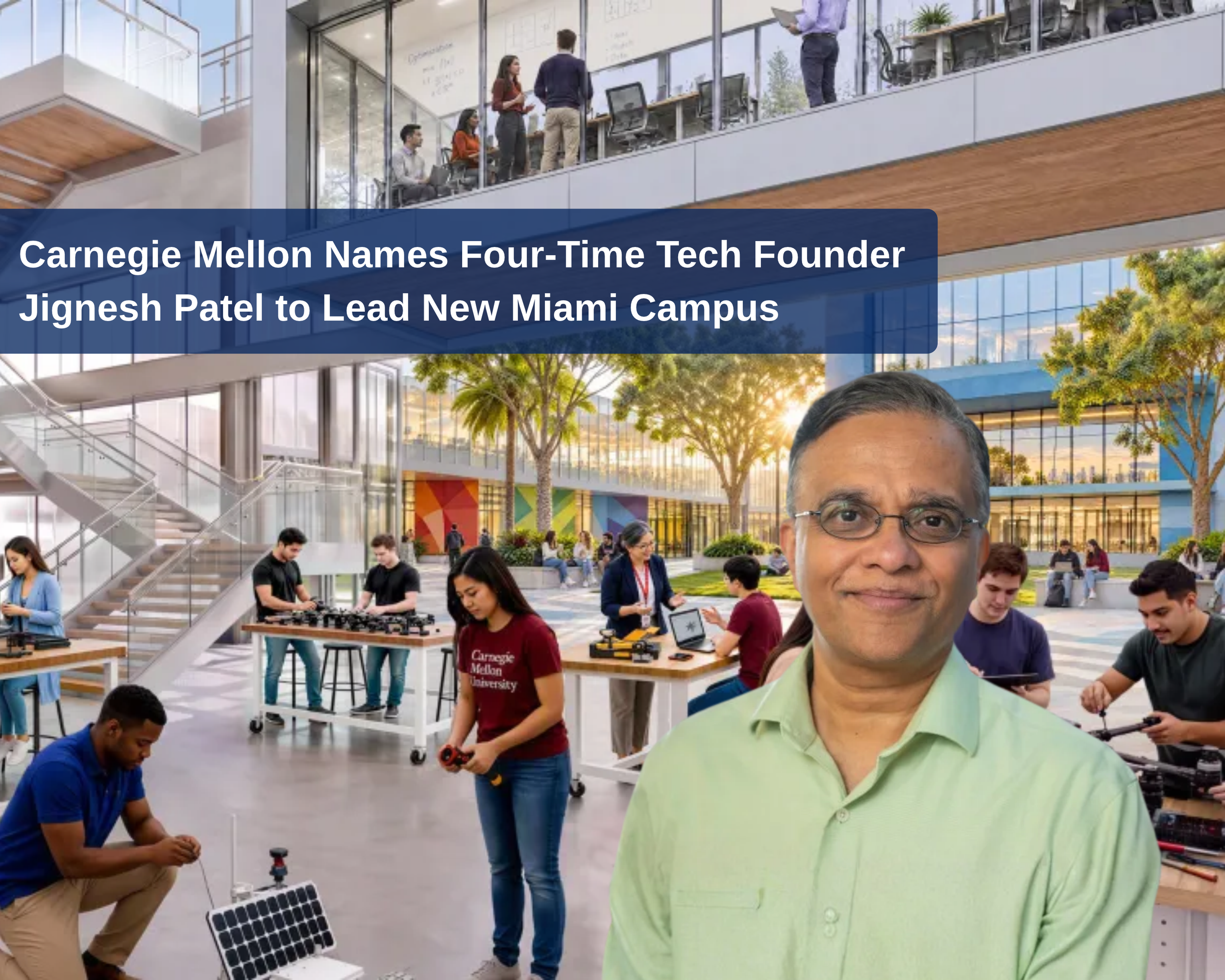
The planned establishment of Carnegie Mellon University programs in Miami and the continued development of Vanderbilt University's West Palm Beach campus could create additional opportunities for research partnerships, workforce development and collaboration between universities and industry.
Although these initiatives extend beyond healthcare, the expansion of research-focused institutions has the potential to strengthen the region's broader innovation economy.
Partnerships among universities, hospitals, biotechnology companies and investors can play an important role in translating scientific discoveries into commercial applications. They can also help attract specialized talent and support companies as they move from research and development toward commercialization.
ZEO's operations at NSU provide an example of how biotechnology companies can establish themselves within an academic research environment while pursuing opportunities beyond South Florida. As more companies seek to commercialize emerging healthcare technologies, access to research capabilities, qualified talent and industry partnerships will remain important factors in the region's competitiveness.
Looking Ahead to National Growth
Georgia and Tennessee represent the next phase of ZEO ScientifiX's regional growth strategy and potential steppingstones toward a larger national presence. The company plans to build on its Florida experience by expanding provider education, product support and clinical collaboration in states where evolving legislation may create additional opportunities for regenerative medicine.
According to its October regulatory filing, ZEO also sees potential in other states that have enacted legislation addressing certain stem cell and regenerative medicine therapies, although the scope and requirements vary by jurisdiction.
The company's expansion remains a developing initiative. Its announced strategy does not yet establish the extent of its operational presence, investment or commercial activity in Georgia and Tennessee. Those details will be important measures of its progress as the company pursues new markets.
For South Florida, ZEO's plans illustrate a broader trend: locally based biotechnology companies are looking beyond the region to commercialize their technologies and participate in emerging national markets.
As research institutions, investors and healthcare innovators continue to strengthen South Florida's life sciences ecosystem, companies such as ZEO ScientifiX could help extend the region's influence well beyond its geographic boundaries.
The company's next phase of growth will offer another opportunity to evaluate how South Florida's scientific talent, research infrastructure and entrepreneurial activity can translate into national biotechnology expansion.




Davie-based ZEO ScientifiX is preparing to expand into Georgia and Tennessee following new regenerative medicine legislation. Operating from Nova Southeastern University, the biotechnology company's growth strategy highlights South Florida's expanding life sciences ecosystem and its growing national influence.