
More Than Citadel: How Ken Griffin's Billions Are Reshaping Miami's Innovation Economy
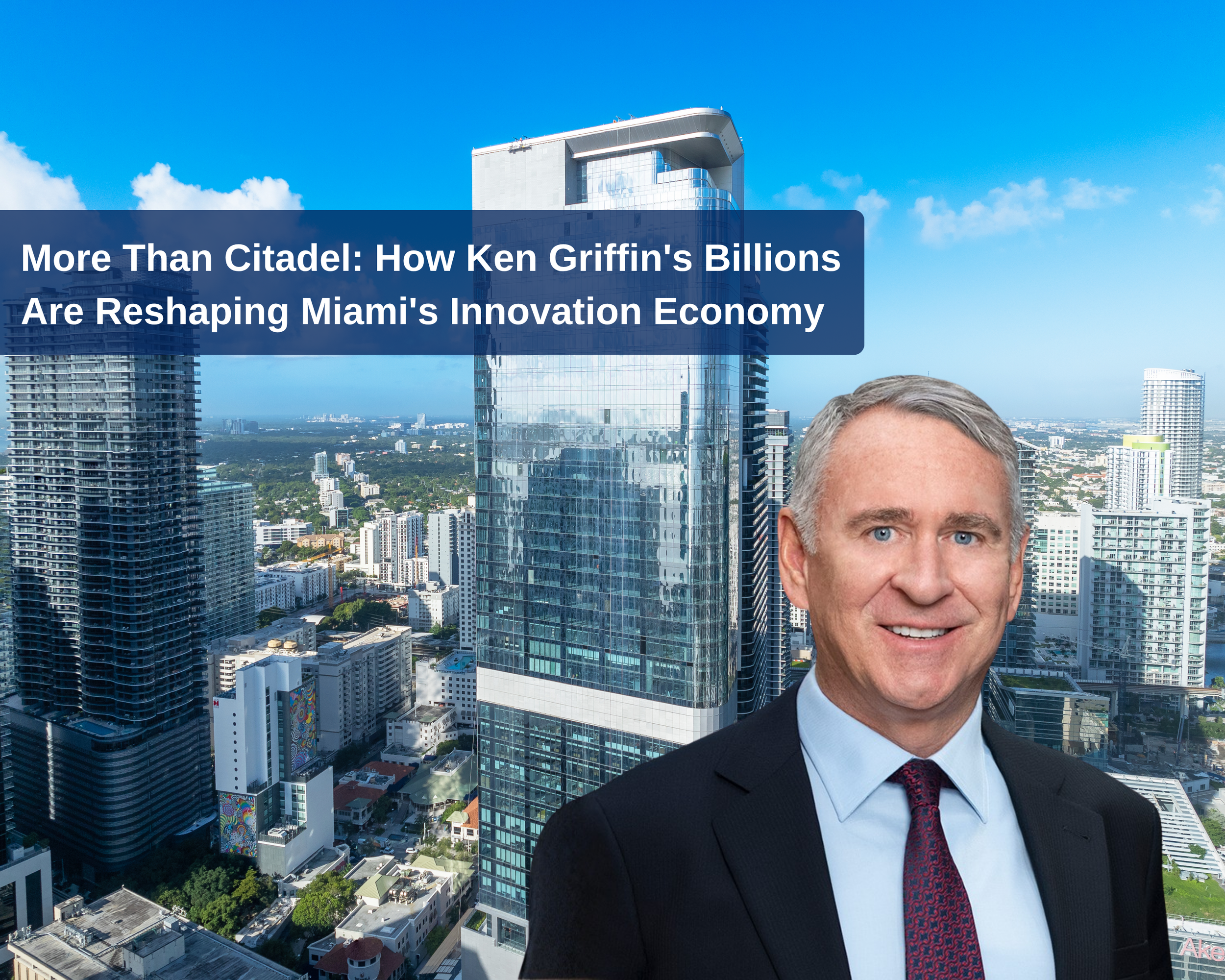
When billionaire investor and Citadel founder Ken Griffin announced plans to relocate the global headquarters of Citadel and Citadel Securities from Chicago to Miami in 2022, the move represented a significant milestone in South Florida's emergence as a major financial and business center.
Four years later, Griffin's influence on the region extends well beyond the financial sector. From a historic $3 billion commitment to Carnegie Mellon University, including $2 billion to establish a new Miami campus, to investments in healthcare, medical research, education, and major real estate development, Griffin is helping shape the institutions that could define Miami's next chapter of economic growth.
His latest commitments also raise a larger question for South Florida's business and technology community: Can a region that has successfully attracted capital, companies, and executives become a national center for developing the talent, research, and innovations that create the next generation of businesses? The answer may depend, in part, on the investments taking shape across Miami-Dade County.
With Carnegie Mellon planning a 35-acre campus in Wynwood, expanded neuroscience research underway at Baptist Health, and new opportunities emerging for collaboration between universities and industry, Griffin's growing footprint represents more than a series of philanthropic announcements.
It reflects a potential shift in Miami's economic development story, from attracting established businesses and outside investment to building the research capacity, workforce infrastructure, and innovation ecosystem needed to sustain long-term growth.
From Citadel's Headquarters Relocation to a Growing Financial Ecosystem
Citadel's decision to establish its global headquarters in Miami brought international attention to the region's growing financial services sector. As one of the world's most prominent hedge funds, Citadel's relocation, alongside Citadel Securities, reinforced Miami's appeal as a headquarters destination for major financial institutions, investment professionals, and corporate executives.
The move also demonstrated that Miami could compete with established financial centers for companies seeking access to talent, international markets, and a business environment supportive of expansion.
South Florida has continued attracting financial services firms, technology companies, venture capital investors, and entrepreneurs. Companies such as Brazilian financial technology giant Nu have identified Miami as a strategic location for expanding their international presence.
Across the broader region, investment firms and venture capital organizations are also increasing their presence. Recent developments involving Driftwood Capital and Andreessen Horowitz's expansion into West Palm Beach reflect South Florida's growing visibility within the investment community.
For Miami, the potential benefits extend beyond corporate prestige. Major financial institutions can attract specialized talent, generate high-paying employment opportunities, expand professional services networks, and increase access to capital for businesses operating throughout the region.
However, attracting established companies is only one component of building a sustainable innovation economy. The next challenge is developing the talent, research capabilities, and institutional partnerships that allow new businesses and technologies to emerge locally.
That is where Griffin's latest investments could have their greatest long-term impact.
Carnegie Mellon's Historic $2 Billion Gift Could Transform Miami's Innovation Economy
On September 30, 2026, Ken Griffin announced a $3 billion philanthropic commitment to Carnegie Mellon University, representing the largest individual gift in the history of American higher education.
Of that commitment, $2 billion will support the establishment of Carnegie Mellon University Miami, while $1 billion will strengthen the university's Pittsburgh campus, including $500 million for its School of Computer Science, which will be renamed the Kenneth C. Griffin School of Computer Science.
For Miami, the investment represents an opportunity to expand the region's capabilities in advanced technology education, scientific research, and innovation. Internationally recognized for its expertise in computer science, artificial intelligence, robotics, and engineering, Carnegie Mellon plans to build on those strengths through programs emphasizing human health and biological discovery, national security, energy and climate resilience, and advanced manufacturing.
The proposed Miami campus will occupy approximately 35 acres in Wynwood, eventually supporting more than 3,500 undergraduate and graduate students, nearly 300 faculty members, and more than 600 staff members. Construction is expected to begin in 2027, subject to necessary approvals, with graduate enrollment targeted for 2028 and undergraduate enrollment planned for 2032.
The project is associated with a reported $1.1 billion acquisition of property from developer Moishe Mana, one of Miami's most significant recent land transactions. Separate from the university's philanthropic commitment, the acquisition underscores the scale of the proposed development and its potential influence on Wynwood's future.
Already known for its arts, creative businesses, restaurants, and expanding commercial development, Wynwood could emerge as a center for advanced research, technology, and entrepreneurship. A major research university can serve as an economic anchor, generating demand for housing, laboratories, office space, retail, and businesses seeking proximity to specialized talent.
Carnegie Mellon's plans also include opportunities for industry research laboratories and venture studios, potentially connecting students and faculty with entrepreneurs, investors, and established companies. These collaborations could lead to new startups, commercialization of university research, and additional venture capital activity, strengthening Miami's ability to develop technologies and businesses locally.
Similar relationships between universities and industry have helped support established innovation centers such as Boston and Silicon Valley, where academic research, entrepreneurial activity, and private investment contribute to regional economic growth.
Carnegie Mellon's arrival also reflects a broader trend of higher education expansion across South Florida. Vanderbilt University's plans for West Palm Beach, along with regional initiatives involving Babson College and Northeastern University, demonstrate the region's growing appeal to academic institutions seeking to expand their presence.
While the proposed campus could generate substantial economic opportunities, its development also raises questions about transportation, infrastructure, housing affordability, and the impact on Wynwood's existing businesses and residents.
Ultimately, Carnegie Mellon's long-term influence will depend on how successfully the university connects its academic and research capabilities with the surrounding community and South Florida's broader business ecosystem.
Griffin's Latest $25 Million Gift Expands Miami's Neuroscience Research
Just days after the Carnegie Mellon announcement, Griffin's investment in South Florida's institutional infrastructure expanded again.
In October 2026, Baptist Health South Florida announced an additional $25 million gift from Griffin, bringing his total philanthropic commitment to neuroscience at the organization to $75 million. The announcement accompanied the groundbreaking of the new home of the Baptist Health Kenneth C. Griffin Neuroscience Institute at Baptist Hospital in Miami.
The planned 197,000-square-foot facility, expected to open in early 2029, will bring advanced clinical care, rehabilitation, research, and medical education together in one location.
“Ken’s generosity will help us accelerate research and innovation, educate the next generation of neuroscience leaders, advance prevention and expand access to highly specialized brain and spine care,” Bo Boulenger, President & CEO of Baptist Health, added. “We are deeply grateful for his confidence in Baptist Health and his belief in what we can accomplish together.”
The additional $25 million contribution will establish the Kenneth C. Griffin Neuroscience Institute Transformational Impact Fund, supporting initiatives in research, innovation, education, and prevention. The institute's plans include expanded clinical-trial capabilities, additional specialized medical providers, advanced technologies, and greater collaboration between researchers and clinicians.
These investments are particularly relevant to South Florida's growing healthcare and life sciences economy. Healthcare innovation increasingly depends on the intersection of medical research, artificial intelligence, data analytics, advanced diagnostics, biotechnology, and specialized clinical expertise.
By expanding the region's capacity for neurological research and treatment, the institute could create additional opportunities for collaboration among healthcare providers, universities, researchers, and technology companies.
“Our vision is to establish a premier destination for brain and spine care in the South - one that keeps pace with our growth as a top-ranked neuroscience institute, meets the needs of a growing patient population and advances research in neuroscience and neurodegenerative disorders,” said Michael McDermott, M.D., system chief executive of Baptist Health Brain & Spine Care. Dr. McDermott is also the chief medical executive and Irma and Kalman Bass Endowed Chair in Clinical Neuroscience at Baptist Health Kenneth C. Griffin Neuroscience Institute; and chair of the Department of Neurosciences at Florida International University Herbert Wertheim College of Medicine.
The timing of the Carnegie Mellon and Baptist Health announcements is also significant. One investment strengthens the region's potential to educate and attract technical talent, while the other expands the infrastructure available for medical research and innovation. Together, they illustrate how investments across different institutions could contribute to a more interconnected regional research economy.
A Growing Portfolio of Investments Across Industries
While Carnegie Mellon represents Griffin's largest recent philanthropic commitment, it builds on several years of investments supporting education, healthcare, and community development across Miami-Dade County.
His contributions span multiple stages of the talent development pipeline, from K-12 education and mentorship to college affordability, specialized research, and advanced medical care.
Some of his most notable commitments include:
Carnegie Mellon University ($3 billion) - $2 billion for CMU Miami; $1 billion for Pittsburgh, including computer science
Baptist Health South Florida ($75 million) - Neuroscience research, clinical innovation, treatment, and education
University of Miami's Sylvester Comprehensive Cancer Center ($50 million) - Cancer research, patient care, and biomedical infrastructure
Nicklaus Children's Hospital ($25 million) - Surgical infrastructure and advanced pediatric healthcare
Miami Dade College ($20 million) - Scholarships, college affordability, and student support
Breakthrough Miami ($2 million) - Student mentorship, educational programming, and opportunity
Venture Miami Scholarship Program ($1 million) - STEM education and access for financially disadvantaged students
The investments represent distinct philanthropic commitments rather than a single coordinated fund, but their collective focus reveals several recurring priorities.
At Miami Dade College, Griffin's $20 million contribution established the Griffin Scholarship Fund, supporting qualifying students through tuition assistance, books, tutoring, career coaching, and other educational resources.
At the University of Miami, his $50 million contribution to the Sylvester Comprehensive Cancer Center supports the expansion of cancer research and treatment capabilities.
His $25 million gift to Nicklaus Children's Hospital supports advanced pediatric care, including the Kenneth C. Griffin Surgical Tower and the hospital's major specialty institutes.
Meanwhile, investments in organizations such as Breakthrough Miami and the Venture Miami Scholarship Program address educational access and opportunities for younger students.
Taken together, these commitments touch multiple stages of workforce and talent development.
Early education and mentorship can help prepare students for advanced study. Scholarships can improve access to college and technical training. Research universities can develop specialized expertise, while healthcare institutions provide opportunities to apply emerging technologies and scientific discoveries. For South Florida, the potential long-term benefit is a stronger pipeline connecting education, research, employment, and innovation.
Connecting Miami's Investments to South Florida's Growing Technology Economy
One of the most important questions surrounding Griffin's investments is how they could complement the businesses and industries already expanding throughout South Florida. The region has experienced growing activity in financial technology, cybersecurity, artificial intelligence, healthcare technology, aerospace, defense, and advanced manufacturing.
Companies operating in these sectors often require highly specialized employees, access to research capabilities, and partnerships with universities and technical institutions. Carnegie Mellon's expertise in artificial intelligence, robotics, computer science, and engineering could eventually create opportunities for collaboration with companies working across these industries.
South Florida's aerospace and defense sector offers one example. As highlighted in VTC's coverage of Pratt & Whitney's investments in South Florida, the region continues to support companies developing advanced technologies for aviation, manufacturing, and national security.
The proposed university's emphasis on national security, advanced manufacturing, and interdisciplinary research could complement the needs of employers operating in these fields.
Healthcare represents another opportunity. The combination of Carnegie Mellon's technical expertise and the expanding research capabilities of institutions such as Baptist Health, the University of Miami, and other regional healthcare organizations could create opportunities for collaboration in medical technology, artificial intelligence, and biomedical research.
For entrepreneurs and investors, these connections matter because innovation ecosystems require more than capital. They need researchers capable of developing new ideas, institutions willing to commercialize discoveries, companies prepared to adopt emerging technologies, and a workforce with the expertise to support growth.
University-industry partnerships, internships, startup accelerators, venture studios, and research commercialization programs could become increasingly important as these investments mature.
However, the opportunities are not automatic. Their success will depend on how effectively academic institutions engage with regional employers, investors, entrepreneurs, and economic development organizations.
What's Next: Building South Florida's Next Generation of Innovation
Ken Griffin's investments represent more than an expansion of Miami's financial, educational, and healthcare infrastructure. They reflect an opportunity for South Florida to move beyond attracting established companies and outside capital toward developing the talent, research, and entrepreneurial opportunities that can sustain long-term economic growth.
The impact could also extend well beyond Miami-Dade County. South Florida's business and technology ecosystem increasingly connects Miami-Dade, Broward, and Palm Beach counties, creating opportunities for universities, healthcare institutions, investors, and businesses to collaborate across industries and geographic boundaries.
For the region's business and technology leaders, the next chapter will depend on turning these investments into meaningful outcomes. That includes research partnerships, emerging companies, new technologies, skilled employment opportunities, and stronger connections between education and industry.
Ultimately, the success of Griffin's investments will be measured not simply by the billions committed or the institutions established, but by the economic opportunities and innovations they help generate in the years ahead.
South Florida has demonstrated its ability to attract investment and business growth. The next chapter will be defined by what the region can create, develop, and sustain on its own. Griffin's growing commitment to Miami could help shape that future, with an impact reaching far beyond the institutions receiving his support.
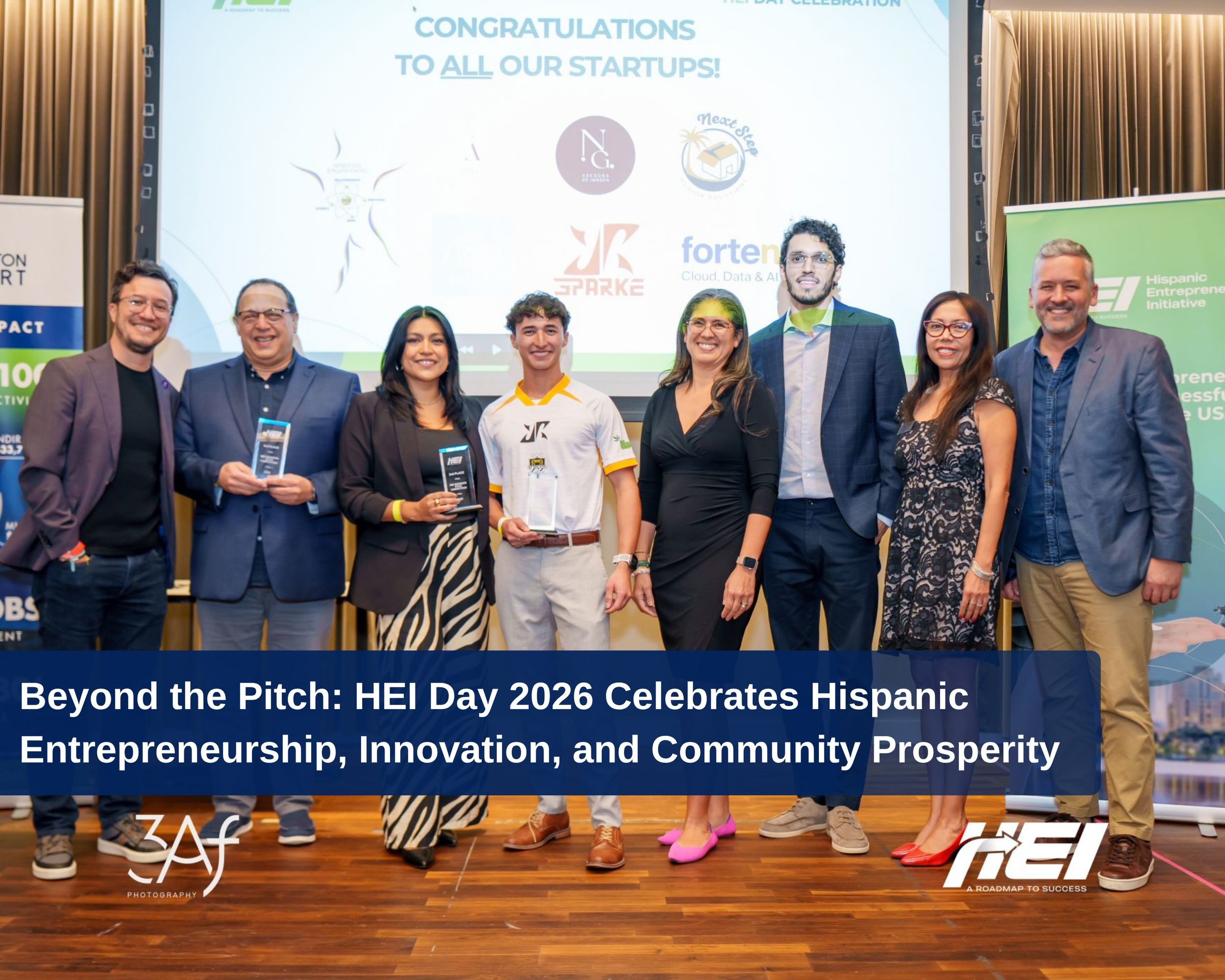

Florida's Ambition Accelerated is taking startup growth statewide, connecting 46 emerging technology companies with CEOs, investors, and corporate partners. Meet the 19 South Florida startups selected and explore what this initiative could mean for the region's innovation economy.