

Florida Atlantic University has secured a $200,000 federal award to develop a regional quantum cybersecurity workforce initiative, adding another component to South Florida's growing investments in quantum computing, advanced technology and workforce development.
The cooperative agreement, awarded by the U.S. Department of Commerce's National Institute of Standards and Technology (NIST), will support training programs, curriculum development and career pathways designed to prepare students and working professionals for cybersecurity challenges associated with emerging quantum technologies.
The initiative will serve Palm Beach and Broward counties and the Treasure Coast counties of Martin, St. Lucie and Indian River. The project comes as South Florida universities, technology companies and economic development organizations are expanding their efforts to establish the region as a center for quantum computing research, commercialization and workforce development.
Part of a National Cybersecurity Workforce Initiative
FAU is one of nine organizations across eight states selected for NIST's 2026 Regional Alliances and Multistakeholder Partnerships to Stimulate Cybersecurity Education and Workforce Development, or RAMPS, program.
The federal agency announced more than $1.7 million in cooperative agreements in September to address cybersecurity workforce needs through partnerships among educational institutions, employers, government agencies and community organizations.
The RAMPS program is administered through NICE, a NIST-led initiative focused on cybersecurity education and workforce development. Rather than concentrating exclusively on academic research, the program emphasizes aligning education and training with regional employer needs, creating practical learning opportunities and expanding pathways into cybersecurity careers.
FAU's project, titled "Building the Quantum Cybersecurity Workforce in the Palm Beach and Treasure Coast Region," will focus specifically on the intersection of quantum computing, cybersecurity and critical infrastructure.
The initiative will be led by Yufei Tang, associate professor in FAU's Department of Electrical Engineering and Computer Science and director of the university's FPL Center for Intelligent Energy Technologies (InETech). Co-principal investigators include Hari Kalva, professor and chair of the Department of Electrical Engineering and Computer Science, and Zebo Yang, assistant professor in the same department.
Preparing for Cybersecurity Challenges in the Quantum Era
Quantum computing presents both opportunities and challenges for organizations that depend on secure digital infrastructure. Although quantum computers are not yet capable of broadly breaking modern encryption systems in practical deployments, sufficiently powerful future machines could threaten widely used public-key cryptographic methods. That prospect has increased interest in quantum-resistant encryption, secure communications and workforce training across industries handling sensitive information.
For organizations in financial services, health care, defense, energy and telecommunications, preparing for quantum-era cybersecurity threats could become an increasingly important part of long-term technology planning. FAU's initiative seeks to address this challenge by combining cybersecurity education with exposure to quantum computing technologies and real-world infrastructure systems.
The program will develop a Quantum Cybersecurity Workshop Series, reusable curricula, case studies and online training resources aligned with the NICE Workforce Framework for Cybersecurity. Participants are also expected to gain access to mentoring, internship opportunities and engagement with employers. The goal is to help students and professionals develop practical skills while establishing a more coordinated regional approach to emerging cybersecurity workforce needs.
Industry and Education Partnerships
A central component of the NIST-funded initiative is its collaboration with technology companies, educational institutions and organizations involved in critical infrastructure protection.
FAU is partnering with D-Wave Quantum, a quantum computing company expanding its presence in Boca Raton, along with InfraGard South Florida Members Alliance, the School District of Palm Beach County, Broward County Public Schools and FAU's Alexander D. Henderson University School. These partnerships are designed to connect academic instruction with industry expertise, cybersecurity practices and educational pathways beginning at the K-12 level.
D-Wave's participation also connects the workforce initiative to FAU's broader investment in quantum computing infrastructure. The university has announced plans to install a D-Wave Advantage2 quantum annealing computer with more than 4,400 qubits at its Boca Raton campus, expanding access to advanced computing capabilities for research, education and industry collaboration.
“This NIST award builds directly on Florida Atlantic’s investment in quantum computing and the College of Engineering and Computer Science’s strengths in cybersecurity, AI and advanced computing as well as power infrastructure systems,” said Stella Batalama, Ph.D., dean of FAU's College of Engineering and Computer Science.
Batalama emphasized that the initiative will build on those investments by providing students and professionals with hands-on experience in emerging technologies while developing the specialized skills needed to protect critical systems and infrastructure.
The planned D-Wave system is designed for specialized optimization and related computational applications rather than functioning as a universal quantum computer. Its addition, combined with the NIST-funded training initiative, reflects FAU's efforts to connect advanced research capabilities with practical cybersecurity education and industry workforce needs.
Protecting Critical Infrastructure
One distinguishing feature of FAU's program is its emphasis on power and energy systems. Through the university's FPL Center for Intelligent Energy Technologies, participants will be able to engage with research and training environments involving power infrastructure, advanced simulation and hardware-in-the-loop capabilities. These resources can help connect classroom instruction with the operational challenges faced by organizations responsible for essential services.
As utilities and other infrastructure operators adopt increasingly connected digital systems, cybersecurity professionals must understand both traditional cyber threats and the potential implications of emerging computing technologies. The initiative also builds on FAU's existing cybersecurity education efforts, including its National Science Foundation-supported CyberCorps Scholarship for Service and CyberTraining programs.
By incorporating quantum concepts into these established resources, FAU aims to broaden its cybersecurity training capabilities while developing educational materials that can continue to support regional workforce development beyond the initial federal award.
Building the Workforce for South Florida's Quantum Future
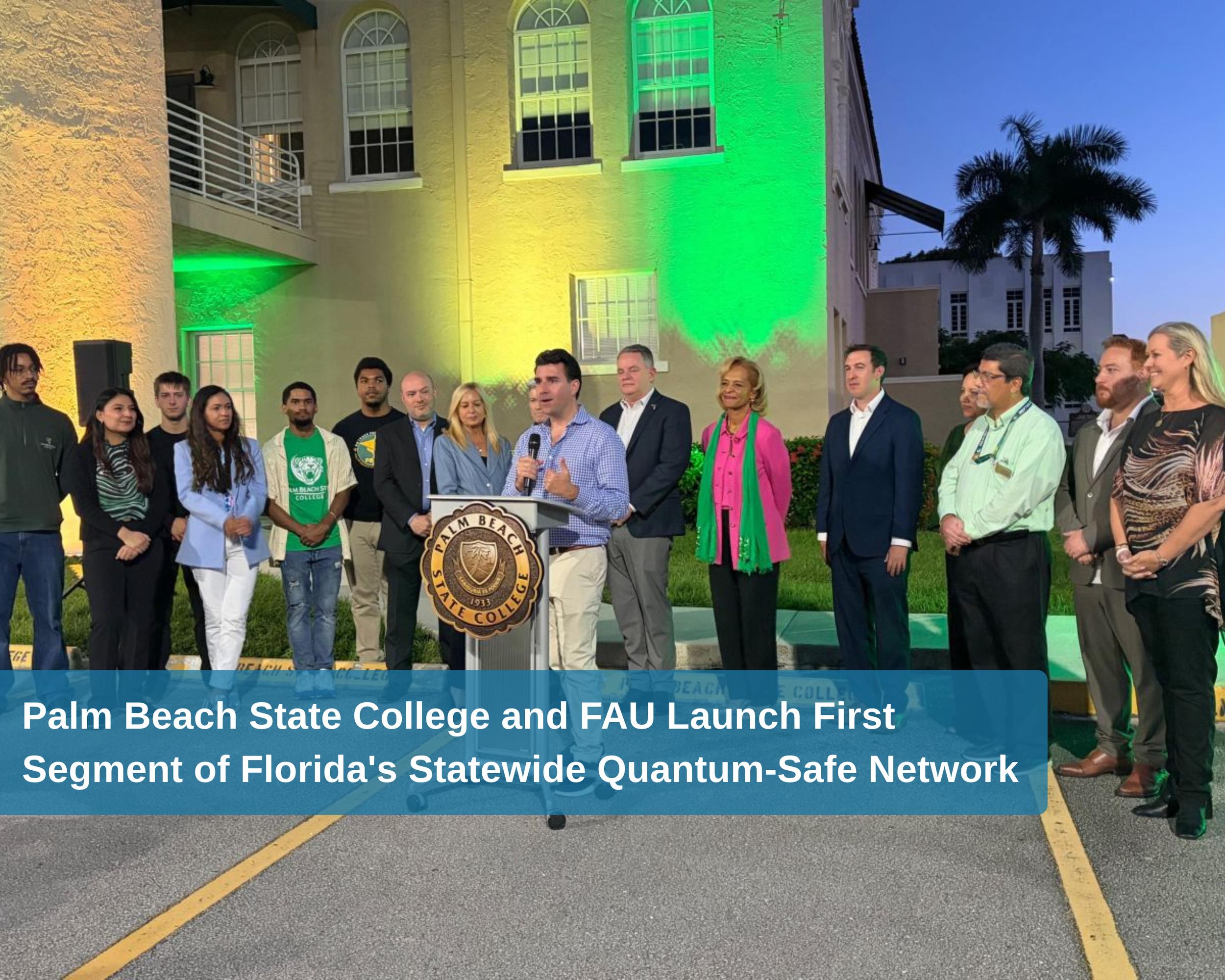
FAU's NIST grant comes as Palm Beach County and the broader South Florida region accelerate investments in quantum computing, cybersecurity infrastructure and emerging technologies. From FAU's partnership with D-Wave Quantum to the recent launch of the first segment of Florida's statewide quantum-safe network, the region is beginning to establish the infrastructure needed to support a growing quantum technology ecosystem.
While these investments focus on advancing technology and research capabilities, the $200,000 NIST award addresses an equally important challenge: developing the skilled workforce needed to support them.
For employers, the initiative could expand access to specialized cybersecurity talent and create opportunities for collaboration with academic institutions. For students and working professionals, it could establish new pathways into careers involving quantum cybersecurity, secure communications and critical infrastructure protection.
The grant's long-term impact will depend on how effectively participating organizations translate training, industry partnerships and educational resources into meaningful career opportunities and employer engagement.
As South Florida continues to build its quantum technology capabilities, workforce readiness will be essential to sustaining that momentum. FAU's initiative represents another step toward connecting emerging technologies with the people and skills needed to support their adoption, reinforcing the region's ambitions to become a competitive center for quantum innovation.



Florida Atlantic University has secured a $200,000 federal NIST grant to strengthen South Florida's quantum cybersecurity workforce through hands-on training, industry partnerships and career pathways, supporting the region's growing investments in quantum computing and emerging technol