
Florida Government Programs Supporting Advanced Air Mobility
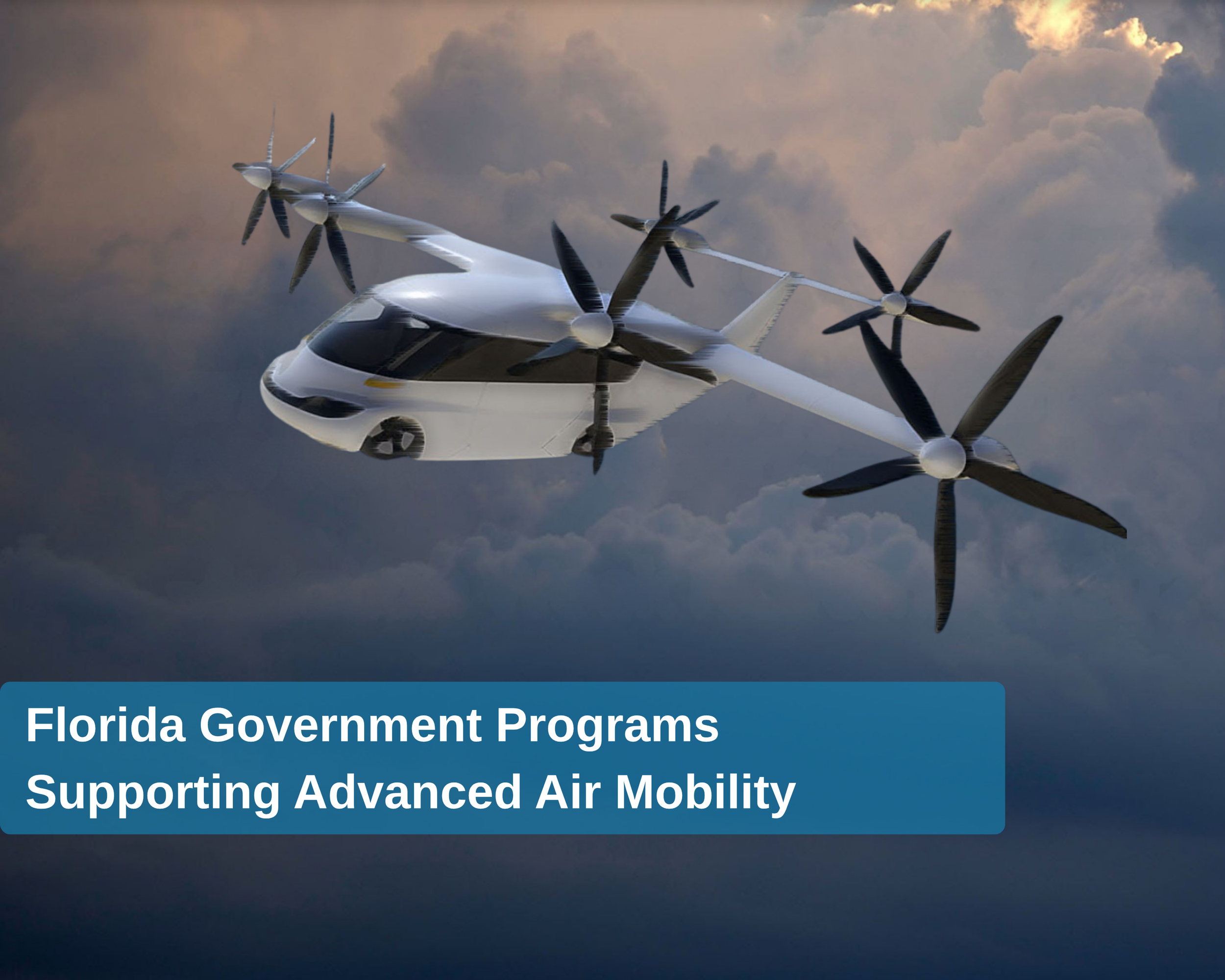
While many regions are waiting for eVTOL aircraft to reach commercial certification, Florida has emerged as one of the most proactive states in the U.S. supporting advanced air mobility (AAM), not just through infrastructure planning, but through coordinated government programs, research initiatives, funding mechanisms, and partnerships that help lay the groundwork for widespread eVTOL operations.
Planning for Advanced Air Mobility
The Florida Department of Transportation (FDOT) is an executive agency that reports directly to Florida Gov. Ron DeSantis. The organization has begun developing strategies to integrate advanced air mobility into the state’s transportation system.
Key areas of focus include:
planning for vertiport locations
integrating eVTOL aircraft with existing airports
developing land-use guidance for cities and counties
coordinating with the FAA and private industry
These efforts are designed to ensure that once aircraft certification occurs, the infrastructure and regulatory frameworks will already be in place.
FDOT’s mission is to provide a safe, statewide transportation system that supports the efficient movement of people and goods, strengthens Florida’s economic competitiveness, protects the environment and natural resources, and enhances the quality of life and connectivity of communities. The agency fulfills this mission by planning and developing Florida’s transportation network, either directly or through partnerships.
Building Vertiport Infrastructure
A major challenge for the electric vertical takeoff and landing industry is building vertiports, the specialized facilities where eVTOL aircraft take off, land, park and recharge. Vertiports are critical to advanced air mobility because they serve as the physical infrastructure connecting air taxi services to passengers, airports, business districts and major destinations.
Across Florida, several sites are being evaluated for conversion or new construction to support eVTOL operations. Planners and developers are looking at existing aviation infrastructure, such as heliports and private aircraft facilities, as well as entirely new sites that blend transportation, real estate and technology.
In South Florida, multiple eVTOL companies are pushing for and supporting vertiport proposals as part of major real estate and transportation projects:
Hard Rock Stadium in Miami Gardens has been identified as a potential hub, with developers and airline partners exploring how the existing helipad could be upgraded to support eVTOL flights. The site’s proximity to major highways, public transit and entertainment venues makes it a strong candidate for early service.
In Little Haiti, the proposed Magic City Innovation District includes plans for an urban vertiport that would serve downtown Miami and connect to regional eVTOL routes. Developers see the facility as a way to integrate advanced mobility into a mixed‑use neighborhood that includes housing, offices and retail.
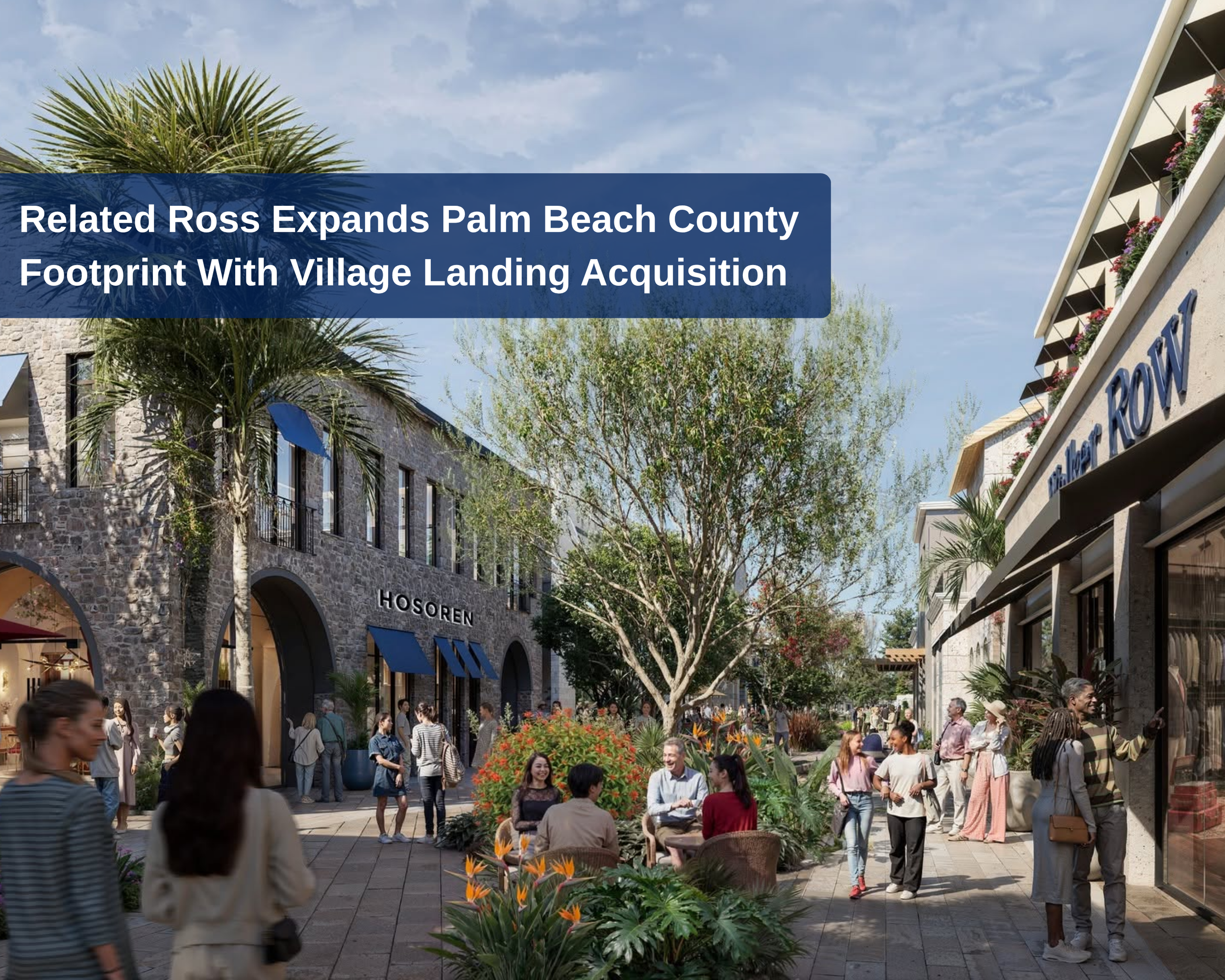
Downtown West Palm Beach is another focal point. Real estate developer Related Ross has discussed plans for a vertiport within a major redevelopment, positioning the city as a northern anchor for regional air taxi service.
Additional vertiport concepts are being considered near major airports such as Miami International Airport and Fort Lauderdale-Hollywood International Airport, which could allow eVTOL passengers to connect seamlessly with commercial airline flights.
Vertiports are designed with multiple components, including passenger boarding areas, aircraft charging stations, flight operations control, maintenance zones and safety buffers. Some proposals envision vertiports integrated into garages or existing multi‑modal hubs, allowing passengers to transition easily between ground and air travel.
By planning vertiport infrastructure now, before eVTOL aircraft reach full commercial certification, Florida aims to ensure that a network of operational takeoff and landing facilities is ready when demand arrives. This strategy positions the state to be one of the first in the U.S. with tangible advanced air mobility service.
Public–Private Collaboration
Florida’s approach to advanced air mobility emphasizes collaboration between government and industry. Initiatives such as building vertiport infrastructure are supported by public‑private partnerships involving government agencies, developers and eVTOL manufacturers.
Coordination with the Federal Aviation Administration (FAA) is underway to ensure vertiports meet safety, airspace and zoning requirements, including approaches, obstacle clearance and charging infrastructure. Regulators have signaled they will publish guidance on vertiport site approval, a step that many industry watchers say is critical to accelerating deployment.
Private companies are working alongside public agencies to design:
regional air taxi networks
electric aircraft charging infrastructure
vertiport development models
Doroni Aerospace received FAA special airworthiness certification for its prototype in 2023, allowing flight testing to continue. Companies such as UrbanLink are already partnering with infrastructure developers to integrate air taxis into future transportation networks.
Preparing for the Next Generation of Aviation
Advanced air mobility is still an emerging industry, but Florida is positioning itself to move quickly once commercial aircraft certification is complete. By investing early in policy, infrastructure, and planning, the state is creating the conditions necessary for a new era of regional air transportation.
Florida isn’t just waiting for eVTOL aircraft to arrive, it’s building the ecosystem that could allow electric air taxis to become part of everyday mobility and South Florida is poised to become the perfect corridor to launch the eVTOL market.




Miami-based TrustedRouter has raised $1.25 million in seed funding as demand grows for infrastructure connecting businesses with multiple AI models. The startup provides access to more than 600 models across over 81 providers while helping users select models based on performance, cost, privacy, and reliability. TrustedRouter is also emphasizing confidential computing and open-source technology to protect sensitive customer data. The funding adds another AI infrastructure startup to South Florida’s growing technology ecosystem.