

The GLP-1 Gold Rush: What eMed, Tom Brady, and the Telehealth Boom Mean for South Florida’s Business Community
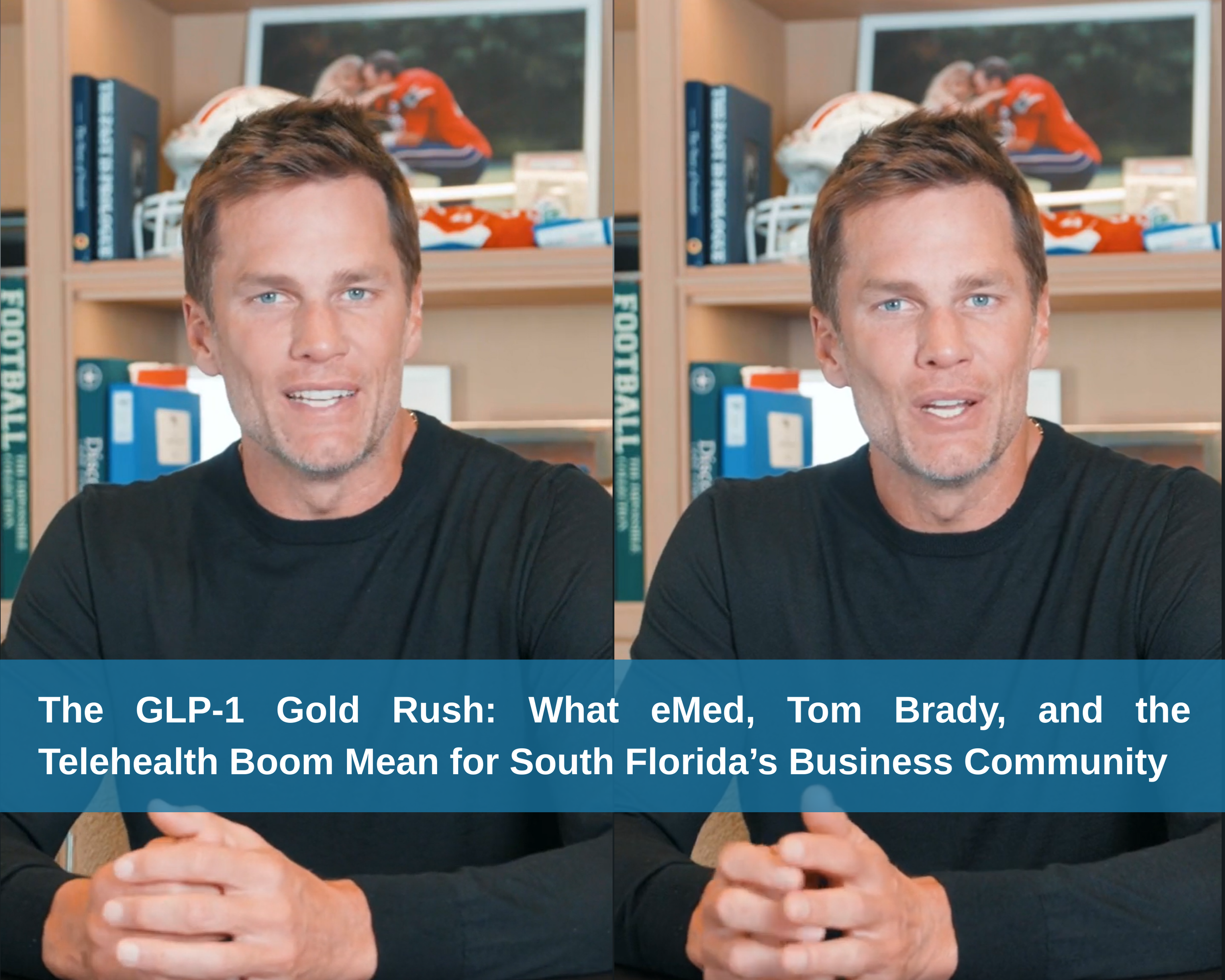
The business of weight loss has become the business of workforce performance.
As GLP-1 medications such as Ozempic and Wegovy move from celebrity headlines to corporate benefits strategies, a new healthcare arms race is taking shape, one that blends telehealth technology, employer-sponsored coverage, regulatory oversight and high-profile brand partnerships.
One of the most visible players in this shift is eMed, which recently appointed former NFL quarterback Tom Brady as chief wellness officer and announced a partnership with Beyond Med Plans Inc. to expand access to structured GLP-1 programs.
For business leaders, particularly in innovation-driven regions such as South Florida, the implications extend beyond healthcare. The debate now centers on cost control, productivity, talent retention and the next evolution of employer-sponsored wellness.
Telehealth Models Are Not All The Same
The surge in GLP-1 demand has produced distinct business models, each with different implications for employers and consumers. Companies such as eMed position themselves as population health platforms rather than simple prescription providers.
eMed’s model combines virtual physician consultations, digital eligibility screening, at-home lab coordination, ongoing metabolic monitoring and behavioral coaching within a centralized telehealth platform. The company emphasizes technology-enabled tracking systems that monitor adherence, biometric data and engagement over time, giving employers aggregated reporting on outcomes while maintaining patient privacy.
The approach is designed to create continuity of care rather than one-time prescribing. By embedding GLP-1 access into employer health plans and layering in digital monitoring tools, structured platforms aim to reduce long-term cardiometabolic costs and improve measurable workforce health outcomes.
Brady’s appointment reflects a broader strategy: GLP-1 therapy is increasingly framed not only as treatment but as part of mainstream wellness and longevity conversations, a narrative that resonates in corporate leadership circles.
"High-quality medical care should be accessible and delivered responsibly with decisions grounded in medical evidence and individual needs," said Tom Brady. "At eMed, the focus is improving population health at scale by delivering best-in-class GLP-1 care to workforce populations. These medications can be truly game-changing but only when paired with the right clinical guidance and ongoing support to protect long-term health."
Telehealth’s Expansion
National telehealth providers such as Ro, Hims & Hers Health and LifeMD offer streamlined online consultations and prescription fulfillment. For individual consumers, the model offers convenience. For employers managing significant pharmacy expenditures, questions remain about sustained adherence and cost predictability.
Other providers focus on lower barriers to entry, including flexible refill systems and cash-pay pricing structures. Some have offered compounded alternatives where permitted. These models appeal to price-sensitive consumers but face growing regulatory scrutiny as federal agencies increase oversight of compounded GLP-1 products. For employers, regulatory durability and clinical oversight are becoming central considerations in vendor selection.
Brick-and-mortar weight management and primary care clinics continue to prescribe GLP-1 medications within broader treatment frameworks. The advantages include integrated, face-to-face care and established patient relationships. The limitations include scheduling constraints, geographic access and limited scalability compared with digital platforms.
Telehealth’s expansion is not replacing in-person medicine but reshaping expectations around accessibility and speed.
Why Employers Are Paying Attention
GLP-1 medications are increasingly associated with managing obesity, Type 2 diabetes, cardiovascular risk and related chronic conditions, all major drivers of employer healthcare costs.
Executives evaluating GLP-1 coverage typically focus on three factors:
Cost containment and pharmacy spend predictability
Long-term adherence and measurable health outcomes
Clinical and regulatory defensibility
"GLP-1s are triggering a generational shift in healthcare and there's no turning back," said Linda Yaccarino, CEO of eMed. "Their adoption is one of the most urgent challenges employers face today, and the need for smarter, more disciplined care around these medications has never been greater. With Tom, we are accelerating our mission to offer a differentiated solution for the future of workplace health."
Structured telehealth platforms argue that technology-enabled monitoring and data analytics can help control runaway spending by improving compliance and identifying risks early.
Meanwhile, pharmaceutical manufacturers such as Novo Nordisk and Eli Lilly and Company are expanding employer-facing programs, signaling that GLP-1 therapies are becoming embedded in corporate health strategies rather than optional add-ons.
South Florida’s Strategic Position
South Florida’s economic and demographic profile makes it particularly relevant to the GLP-1 expansion. The region combines a large aging population with elevated rates of cardiometabolic conditions and a strong wellness-oriented culture. Demand for metabolic health solutions is already high across Miami-Dade, Broward and Palm Beach counties.
At the same time, the area’s economy spans healthcare, hospitality, finance and a rapidly growing technology sector. Employers in these industries face continued pressure from rising healthcare costs and competitive labor markets.
Structured GLP-1 programs may offer employers in the region an opportunity to manage chronic disease expenses while enhancing recruitment and retention strategies.
For technology-focused companies, digital health partnerships also align with broader innovation initiatives, reinforcing South Florida’s emerging identity as a health-tech and telehealth growth market.
From Weight Loss To Workforce Strategy
The broader shift reflects a reframing of metabolic health as a performance lever.
The current marketplace spans:
Fast-access telehealth models prioritizing convenience
Flexible pharmacy-based programs emphasizing affordability
Structured, employer-integrated platforms focused on long-term outcomes and return on investment
No single model dominates. But for business leaders evaluating health benefits, the differentiation increasingly hinges on sustainable structure, measurable results and technology-enabled oversight rather than speed alone.
A Strategic Inflection Point
GLP-1 therapies are reshaping healthcare economics and employer decision-making.
Companies such as eMed are betting that disciplined, data-driven telehealth models, supported by clinical infrastructure and employer integration, represent the next phase of the industry.
For South Florida’s business community, the GLP-1 surge is not simply a wellness trend. It is a strategic inflection point that intersects healthcare costs, technology adoption and competitive workforce strategy.
Organizations that understand the shift early may be better positioned to manage expenses, support employee health and compete in an increasingly performance-focused economy.





2150 co-founder Christian Hernandez Gallardo is leaving venture capital to become Executive Chair of Boca Raton-based Blue Frontier, helping the climate-tech company scale manufacturing, expand internationally and capitalize on growing demand for energy-efficient cooling as AI and data centers place new pressure on the electrical grid.