
Could Autonomous Transit Transform West Palm Beach? Glydways Proposes Airport-to-Downtown Connector
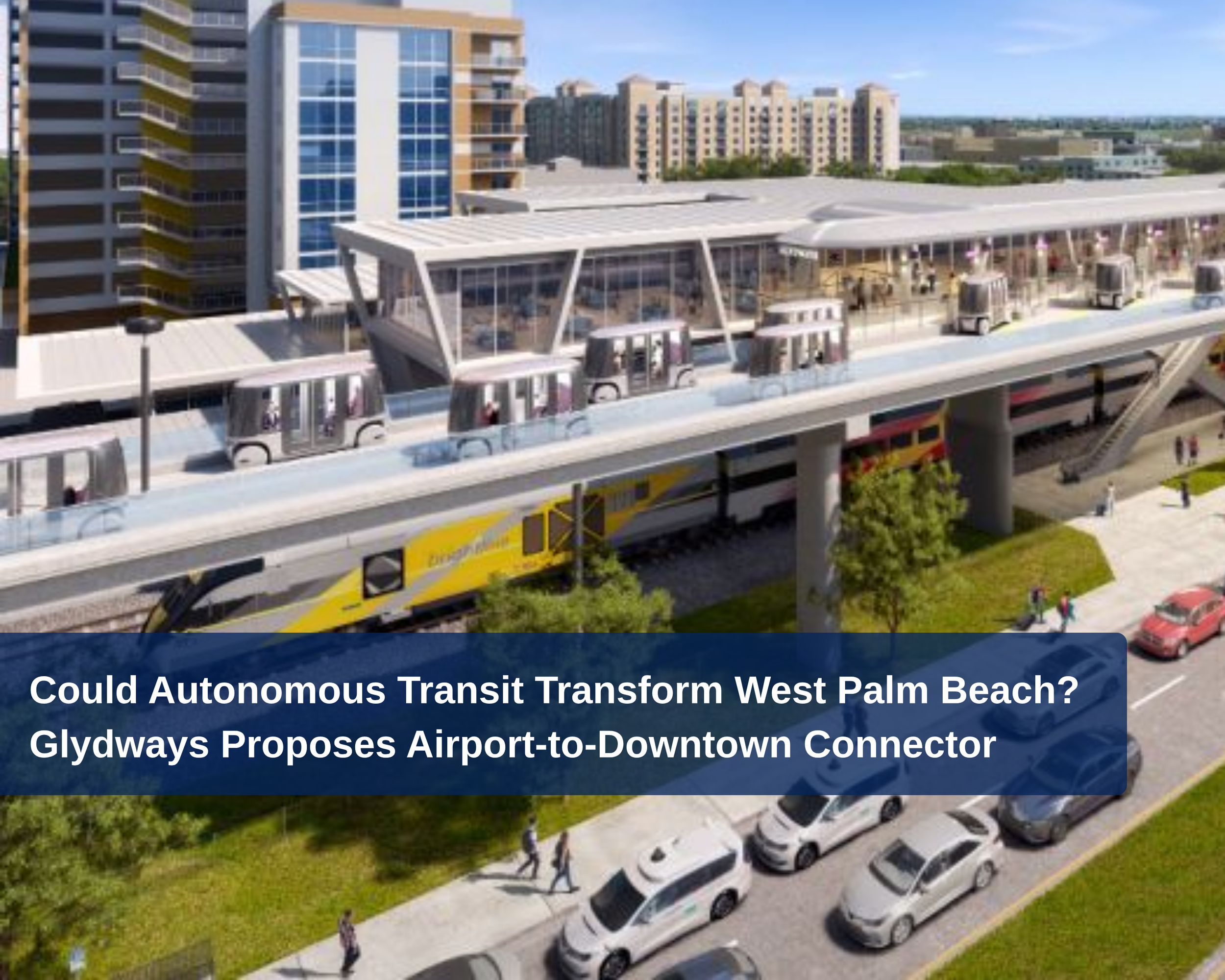
The City of West Palm Beach could one day become home to one of the nation's most innovative urban transportation systems.
California-based mobility company Glydways has proposed an autonomous, on-demand transit network that would connect Palm Beach’s International Airport with downtown West Palm Beach using a dedicated elevated guideway. If ultimately approved and constructed, the project would create a new way for residents, commuters, convention attendees, and visitors to travel between some of Palm Beach County's busiest destinations without sitting in traffic.
While the concept generated considerable interest, Palm Beach County commissioners opted not to advance the proposal during their July 7 meeting, citing funding concerns and requesting additional information before moving forward.
A New Vision for Urban Mobility
Unlike traditional rail or fixed-route transit systems, Glydways is proposing a network of small, autonomous electric vehicles operating on a dedicated elevated guideway above existing roadways. Designed to function more like an on-demand rideshare than a train, passengers would request a vehicle when needed and travel directly to their destination without intermediate stops. Each vehicle is expected to accommodate approximately four to six passengers, offering private or small-group trips while operating continuously throughout the day.
"The service combines the convenience and efficiency of a dedicated railway with the comfort of a private car service," said Brian Gettinger, Glydways' Senior Vice President of Growth in the Americas.
The initial proposal envisions an approximately four- to five-mile corridor connecting several of Palm Beach County's most important destinations, including President Donald J. Trump International Airport, the Palm Beach County Convention Center, CityPlace, Brightline Station, Tri-Rail, the Palm Beach County Courthouse, the NORA District, and the Historic Northwest neighborhood. According to Glydways, the system could significantly reduce travel times, with trips between the airport and convention center taking about seven minutes and connections between the convention center and Tri-Rail requiring as little as one to two minutes.
Beyond improving mobility, Glydways positions its technology as a more cost-effective alternative to traditional rail infrastructure. Because the autonomous vehicles are substantially lighter than trains, the elevated guideways require less structural support, potentially lowering construction costs and reducing the project's physical footprint. The company also envisions funding the project through a public-private partnership, combining private investment with local, state, and federal funding opportunities to help minimize the financial burden on taxpayers. Similar Glydways projects are currently advancing in the Atlanta metropolitan area and San Jose, California, providing early examples of how the technology could be deployed in growing urban markets.
Commissioners Press Pause
On July 7, Palm Beach County commissioners considered whether to direct staff to formally evaluate the unsolicited proposal.
Rather than moving forward, Glydways ultimately withdrew its request after commissioners expressed concerns about committing public funds before additional questions could be answered. One of the primary issues discussed was an estimated $1 million county-funded feasibility study that would have been required as part of the evaluation process. With Palm Beach County currently navigating budget uncertainty and potential property tax changes, commissioners were reluctant to authorize additional spending at this time.
Commissioners emphasized that the decision should not be viewed as opposition to the concept itself. Instead, they requested more information regarding financing, long-term operating costs, implementation strategy, and the overall financial risk to taxpayers before considering the next step.
As Commissioner Maria Marino summarized during the meeting, "We're not against the proposal because you're bringing us something that we as a county have asked for.” She continued, “It's not a no; it's just not now.”
What's Next?
The proposal remains very much alive.
County officials indicated they expect to revisit the concept after the county's budget process is complete later this year. In the meantime, Glydways has an opportunity to further refine its proposal, address commissioners' questions, and demonstrate how the project could be financed with limited public risk.
Should the project eventually move forward, West Palm Beach could become one of the first cities in the United States to deploy a fully autonomous, elevated, on-demand transit system connecting an airport with a downtown core.
Whether Glydways ultimately becomes the solution or simply sparks broader conversations about mobility, the proposal highlights an important reality: as Palm Beach County continues to grow, innovative transportation options will play an increasingly important role in connecting residents, businesses, visitors, and the region's expanding innovation economy.
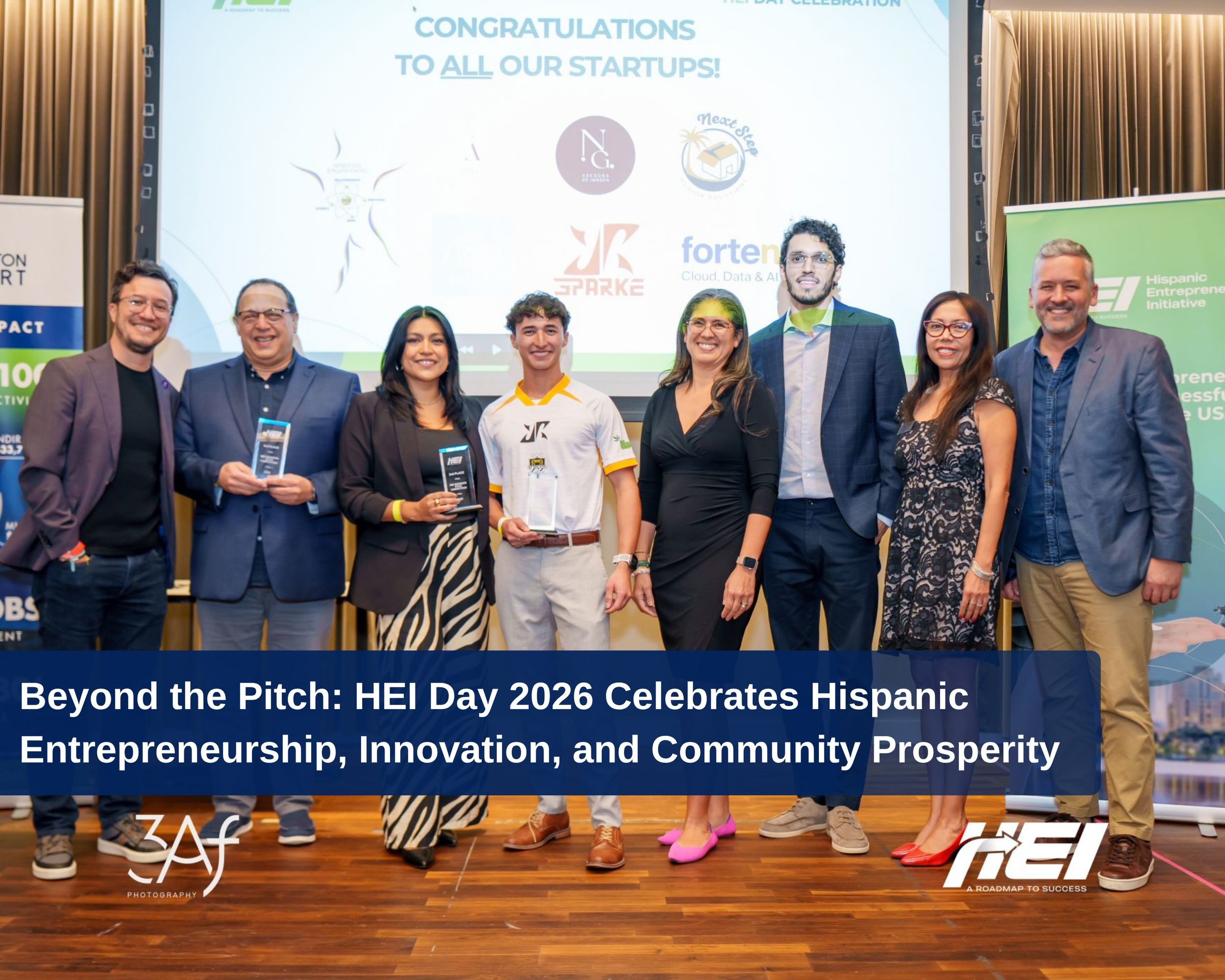


Florida's Ambition Accelerated is taking startup growth statewide, connecting 46 emerging technology companies with CEOs, investors, and corporate partners. Meet the 19 South Florida startups selected and explore what this initiative could mean for the region's innovation economy.