
The Orchestrator: Business Development Board's Coordinating Role
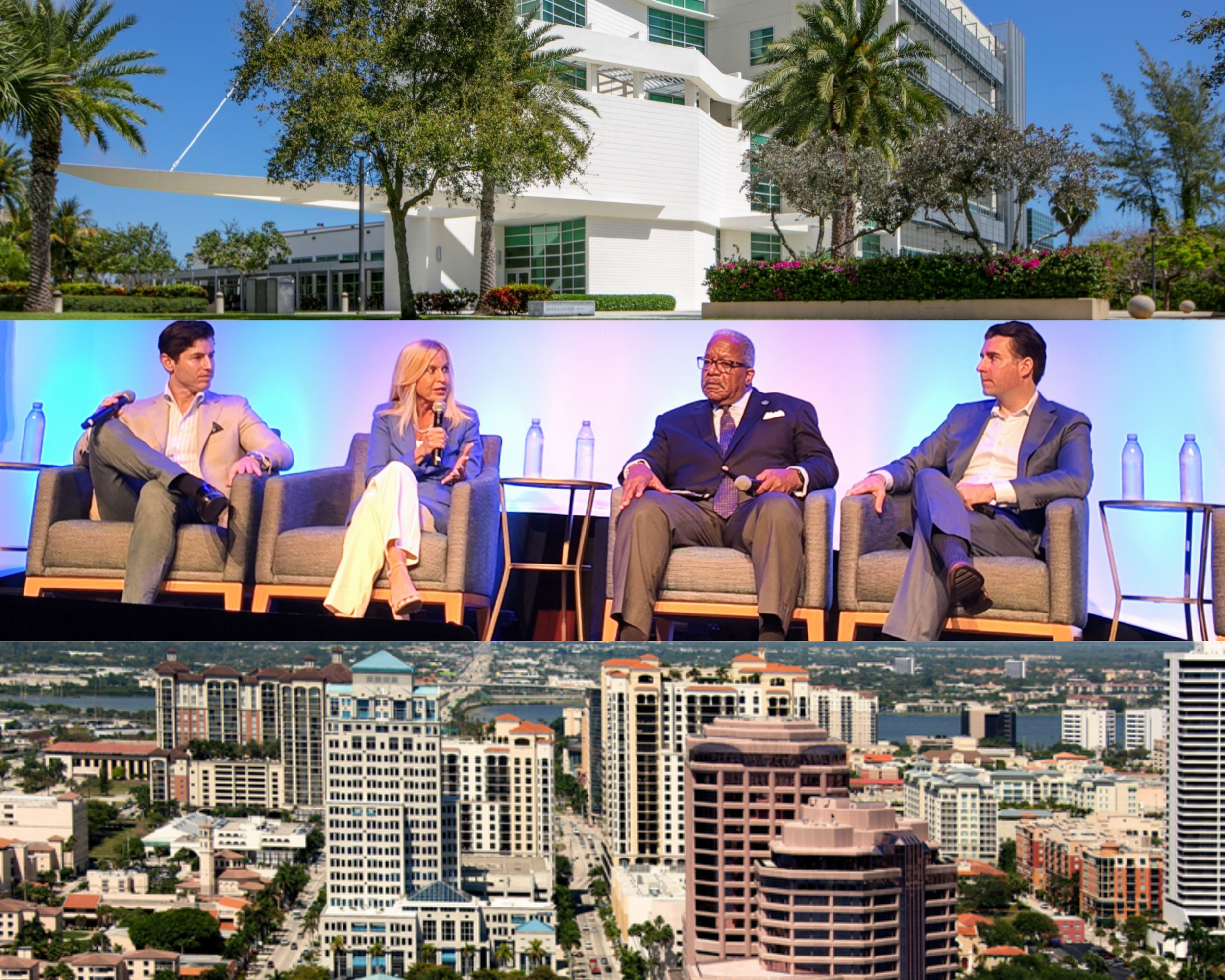
Public-private cooperation drives much of Palm Beach County’s recent tech advancement.
If private developers provide capital and universities provide talent, the Business Development Board of Palm Beach County (BDB) provides coordination, turning individual partnerships into systemic transformation. The BDB operates as a public-private hybrid, partially funded through county contracts while raising matching funds from private industry. It is one of only two accredited economic development boards in Florida.
Kelly Smallridge, president and CEO for over two decades, has facilitated the relocation or expansion of 140 companies since 2020, bringing $1.12 billion in capital investment and 13,110 jobs.
"A decade ago, the 'Wall Street South' concept was met with skepticism, but today it's a recognized brand, attracting major players like BlackRock, Citadel, Goldman Sachs, Point72, and Elliott Management," shared Smallridge, CEO at BDB Palm Beach County . "We view emerging industries, particularly in fields like quantum technology, as the next natural evolution of that success."
The BDB doesn't simply recruit companies. It actively brokers partnerships between those companies, educational institutions, and government agencies to solve workforce challenges before they become deal-breakers. This coordination proved essential when ServiceNow announced in September 2025 its plan to establish regional headquarters, creating 856 jobs averaging $170,000 annually with a projected $1.8 billion economic impact.
Quantum Technology: Building Tomorrow's Industry Today
While Palm Beach County is celebrated for FinTech, a more transformative force is quietly taking shape: a global quantum technology hub. The BDB has been instrumental, engaging directly with over 150 local business leaders through quantum education events and convening university presidents to align curricula with workforce needs.
On October 8, 2025, the Florida Opportunity Fund and Quantum Coast Capital signed a Memorandum of Understanding to formally collaborate, aiming to identify, evaluate, and co-invest in Florida-based companies developing quantum computing, networking, and sensing applications. Matt Cimaglia, managing partner at Quantum Coast Capital, emphasized the importance of building a full quantum ecosystem by connecting entrepreneurs, researchers, and state leadership.
The BDB partnered with The Quantum Insider and Quantum Coast Capital to host Quantum Beach 2025 at the Kravis Center in West Palm Beach. The October 8 event drew over 350 state and industry leaders, serving as an officially recognized gathering of the International Year of Quantum, with corporate sponsors including D-Wave, Quantinuum, IonQ, and Florida Power & Light. "Palm Beach County continues to attract companies and talent shaping the future of innovation," Smallridge said. "Hosting this official IYQ2025 event reinforces our region's leadership in advanced technologies."
At the summit, PBSC President Ava L. Parker unveiled plans to transform the College's historic downtown West Palm Beach building into a state-of-the-art AI and Quantum Innovation Center. The proposed center will serve as a collaborative hub where students, startups, and researchers can work together, featuring hands-on labs, 3D printing spaces, a quantum sensing lab, and collaborative discovery zones. Through a partnership with Florida LambdaRail, PBSC will connect directly to Florida's major universities and national research networks, granting students access to high-speed infrastructure essential for quantum computing and AI.
Speaking on the "Building Florida's Quantum-Ready Workforce" panel, Parker was joined by Florida Commerce Secretary Alex Kelly, who commended the College's forward-thinking approach. "Florida is at the forefront of the next wave of technological progress," Secretary Kelly said. "Palm Beach State College is playing a vital role in that transformation, equipping students with the skills needed to power the industries of tomorrow. Quantum technology will redefine our economy, and institutions like PBSC ensure that opportunity begins right here at home."
Parker emphasized the center's strategic importance: "We are building this in the heart of Palm Beach County. But we are doing this for the state of Florida," she said. The building's unique location near the railway makes it highly accessible for companies and universities across Florida to collaborate. "We want to be that great connector."
Panel moderator Matt Cimaglia noted that collaboration is key to Florida's quantum success. "Florida is taking an inclusive approach to building its quantum ecosystem. By connecting state colleges, universities, and the private sector, we're not just advancing technology, we're creating pathways for students and professionals to be part of one of the most exciting transformations in modern history," Cimaglia said.
Smart Cities: Innovating Urban Systems Through Technology
Beyond infrastructure and headquarters, Palm Beach County is leveraging technology to become smarter and more efficient. A key partnership involves Florida Atlantic University's Institute for Sensing and Embedded Network Systems Engineering (I-SENSE) and the West Palm Beach Community Redevelopment Agency. One visible initiative is the pilot of the Digital Trust for Places & Routines (DTPR) standard along Clematis Street, using QR codes to inform residents transparently about data collection and privacy protections for sensors in public spaces.
The Town of Palm Beach launched 'Ask Poli,' an AI chatbot answering civic queries in over 70 languages. AI in government can strengthen civic engagement, improve transparency, and generate measurable efficiencies.
Private sector companies are also contributing. Guident Corp., a BRiC tenant, is deploying WatchBot™, an autonomous surveillance robot providing real-time monitoring and analytics, setting new standards for intelligent campus management. These examples illustrate a dynamic ecosystem where the public sector tests foundational technologies and private companies commercialize them.
Economic Impact and Future Challenges
The partnerships are yielding quantifiable results. The county hosts over 2,100 tech companies contributing $26.4 billion to the local economy, with average tech salaries at $106,693. The BDB reports the county now hosts 625 life sciences firms, 1,900 tech companies, and 539 corporate headquarters. Nearly 90,000 new residents have moved to the area since 2020, expanding the workforce and boosting infrastructure demand.
However, rapid growth creates challenges. Severe affordable housing shortages and transportation bottlenecks threaten sustainability. Elias Janetis, founder of Squeeze, notes that despite capital influx, competition for talent has intensified. He highlights a critical gap: while late-stage venture capital receives fanfare, pre-seed and seed-stage startups struggle to find initial funding. This "valley of death" for early-stage companies could stifle the innovation pipeline.
The Coordinated Vision Forward
The trajectory of Palm Beach's technology boom appears firmly rooted in collaboration and strategic foresight. Stephen Ross's $10 billion investment signals his belief in the region's potential, extending beyond real estate to integration of educational institutions, entrepreneurial programs, and capital sources. Ross has committed that the Related Ross Foundation will contribute over $1.5 million annually beginning in 2028, with expected growth to $2.5 million per year within a decade.
Mayor Keith James and Kelly Smallridge provide strategic direction and institutional muscle needed to execute ambitious plans. The county's Strategic Economic Development Plan outlines a framework emphasizing prosperity, sustainability, quality of place, equity, and education, explicitly leveraging public-private partnerships to maximize public investment.
The story of Palm Beach's technology boom is one of masterful orchestration. Through interconnected partnerships, the region is systematically building physical infrastructure, nurturing human capital, and cultivating advanced industries necessary to compete globally. While significant challenges remain, the clarity of vision, scale of investment, and depth of collaboration suggest Palm Beach is well-positioned to navigate complexities and secure its future as a leading innovation center. The partnerships aren't just fueling a tech boom. They're building an entirely new economic foundation designed to last generations.



Tri-Rail enters a new era under Executive Director Dave Kubicek as growing ridership, new funding strategies, and regional development opportunities reshape the future of South Florida transit.