
Tri-Rail’s New Funding Strategy Could Reshape Transportation and Development Across South Florida
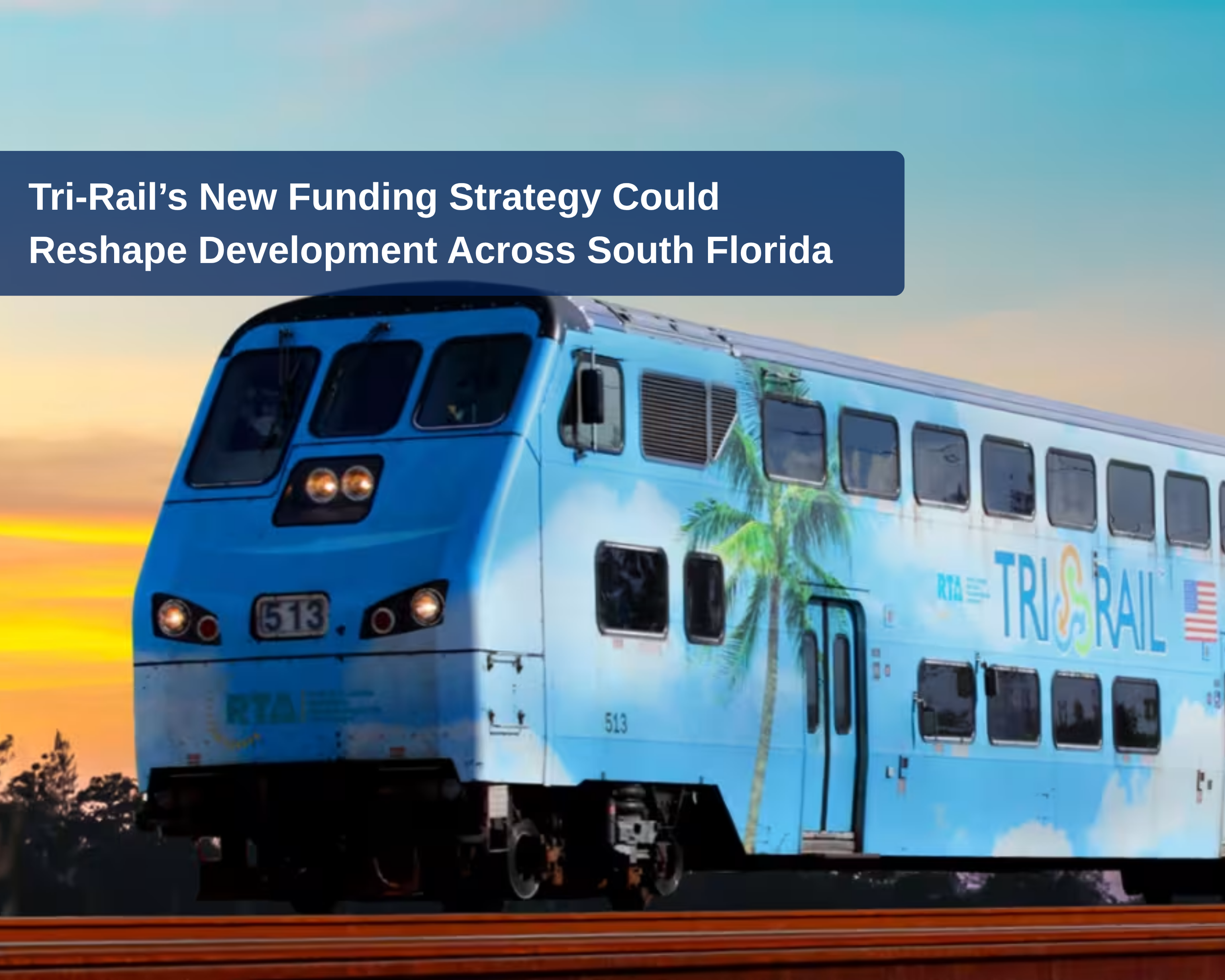
After the state’s $60 million budget cut to the Florida Rail Enterprise last year, Tri-Rail faced an uncertain financial future. But the solution now being negotiated could do much more than keep the trains running.
A proposed agreement between the South Florida Regional Transportation Authority (SFRTA) and the Florida Department of Transportation (FDOT) could give Tri-Rail long-term control of state-owned properties surrounding its stations, opening the door for transit-oriented development, commercial activity, advertising, sponsorships and other revenue-generating opportunities.
SFRTA is also exploring the creation of a Transportation Improvement District (TID) along the Tri-Rail corridor that could allow the authority to capture some of the increased tax revenue generated as development occurs around its stations.
Combined, the strategies could transform a transportation funding crisis into a potentially significant economic development opportunity spanning Tri-Rail’s roughly 70-mile corridor through Palm Beach, Broward and Miami-Dade counties.
Earlier this year, a South Florida team spent more than seven months negotiating with FDOT to address Tri-Rail’s looming budget deficit. Despite ridership reaching its highest level ever, the significant budget cut in 2025 left Tri-Rail facing a $30 million gap and potentially only one year of operating life remaining.
The crisis has pushed SFRTA and FDOT toward a fundamentally different model designed to gradually reduce the system’s reliance on state operating funds.
Instead of simply replacing that funding, however, the proposed strategy could give Tri-Rail something potentially more valuable over the long term: the ability to generate revenue from the land and economic activity surrounding its stations.
From Financial Crisis to a 10-Year Runway
The Florida Rail Enterprise was created in 2009 with the purpose of overseeing and funding government-owned rail systems. Last year, Tri-Rail's state funding dropped from approximately $42 million to $15 million following changes to the state funding structure.
SFRTA Chair and Miami-Dade Commissioner Raquel Regalado was tasked with negotiating with FDOT to ensure Tri-Rail could continue operating along its route connecting Palm Beach, Broward and Miami-Dade counties.
Regalado proposed a memorandum of understanding (MOU) with FDOT that would establish a longer-term strategy for funding the system while SFRTA and the counties develop alternative sources of revenue.
Under the framework being negotiated, the goal is to gradually reduce Tri-Rail's reliance on FDOT operating support over the next decade.
Although a formal agreement has not yet been signed, the parties have agreed to their respective responsibilities and expectations, and the Tri-Rail Board of Directors has approved the strategy. A formal agreement is expected to be signed by the end of the year.
But how Tri-Rail plans to replace that funding is where the agreement becomes particularly significant for South Florida's business community.
Unlocking Development Along a 70-Mile Corridor
As part of the plan, FDOT would provide SFRTA with long-term control of state-owned properties associated with Tri-Rail stations, creating opportunities to generate revenue from assets that have traditionally served primarily as transportation infrastructure. That could fundamentally change how some Tri-Rail properties are used.
Instead of transportation hubs surrounded primarily by parking lots, stations could potentially evolve into mixed-use development centers incorporating restaurants, retail, offices, housing and other businesses.
The proposed framework creates opportunities for Tri-Rail to generate revenue from transit-oriented development, leases, concessions, advertising, sponsorships and other commercial activity surrounding its stations.
For Tri-Rail, that revenue could help replace a portion of the state funding the system has historically relied upon. For South Florida, the impact could extend well beyond transportation.
Tri-Rail isn't a niche transportation system. It is a regional mobility network connecting all three South Florida counties. Giving SFRTA greater ability to develop properties along that network could potentially create a string of development hubs stretching from Miami-Dade through Broward and into Palm Beach County.
That raises a much larger question: Could Tri-Rail's existing real estate become an economic development corridor for South Florida?
Boca Raton Offers an Early Look at the Opportunity
One Tri-Rail station is already providing a glimpse into what that strategy could look like.
In February, SFRTA celebrated the groundbreaking of Link at Boca, which the authority described as its first-ever transit-oriented development. The mixed-use project is being developed adjacent to the Boca Raton Tri-Rail Station.
The project also demonstrates how SFRTA-owned or controlled property can become a source of revenue. Previous development agreements for the Boca Raton station required the developer to pay monthly base rent to SFRTA while advancing the project. The significance goes beyond one development in Boca Raton.
If similar projects can be replicated at other stations, Tri-Rail could begin generating recurring revenue from real estate while simultaneously encouraging private investment around the regional transportation network.
Restaurants and retail could make stations more attractive to riders. Offices could put employers within walking distance of regional transportation. Residential development could give workers the ability to live near transit and commute between counties without relying exclusively on I-95.
The combination could also create new opportunities for private developers and investors interested in transit-oriented projects.
South Florida's major business centers in Miami, Fort Lauderdale and West Palm Beach currently operate largely as distinct urban centers. If Tri-Rail stations develop into hubs of commercial activity, regional rail could increasingly connect those centers rather than simply transport passengers between them.
Capturing the Economic Value Created Around the Stations
Development itself may only be one piece of the funding strategy. Regalado has also said SFRTA is considering establishing a Transportation Improvement District across the Tri-Rail corridor.
The concept could allow SFRTA to capture a portion of the additional tax revenue generated when currently underdeveloped station properties are activated with housing and commercial development. That creates a potentially different financial model.
Instead of relying only on fares, annual state appropriations or even lease revenue, Tri-Rail could potentially benefit from some of the increased property value and economic activity created around its own transportation infrastructure.
Revenue generated through a TID or tax-increment funding mechanism could potentially become a recurring revenue source that SFRTA could use to support future financing. In other words, development around Tri-Rail stations could generate revenue twice: directly through leases and commercial agreements, and indirectly through increased economic value surrounding the stations.
The future value of Tri-Rail may therefore depend not only on how many passengers ride the train, but on what happens when those passengers step off it.
Tri-Rail announced record ridership in 2025. If even a portion of those riders are arriving at stations surrounded by businesses, employers, restaurants and housing, the economic role of the rail system begins to look significantly different.
Connecting Regional Rail to Local Transportation
The development opportunity also coincides with cities throughout South Florida investing in local transportation systems designed to solve the “last-mile” problem.
The City of West Palm Beach’s West Palm Move, for example, will create a minibus system operating on fixed routes and on demand. Tri-Rail could bring riders into major urban centers, where these local systems can complete the connection to offices, restaurants, hotels and other destinations.
Transportation remains one of South Florida's primary pain points for businesses, residents and visitors, and municipalities throughout the region are attempting to address the challenge.
In addition to West Palm Beach, the City of Fort Lauderdale Transit Master Plan demonstrates a similar desire to strengthen local transportation while connecting to regional systems such as Tri-Rail.
The combination of regional rail, local transit and development surrounding stations could create something South Florida has historically struggled to achieve: a transportation network that connects where people live with where they work, shop and do business.
Building a Connected South Florida
The potential impact becomes even larger when transportation is viewed alongside the region's continued business and population growth. Counties are improving connections to airports and other major hubs within their respective communities. Cities are investing in last-mile transportation. Developers continue building denser residential and commercial centers.
As airlines like JetBlue and Breeze Airways expand their South Florida operations, Tri-Rail provides an existing regional backbone connecting increasingly dense population and business centers across county lines.
A stronger Tri-Rail system, particularly one capable of generating more of its own revenue, could also make South Florida more attractive to companies and investors that increasingly view Miami-Dade, Broward and Palm Beach as parts of a single economic region.
While the new agreement would provide Tri-Rail with a financial runway for the next decade, the long-term success of the service will depend in part on its ability to turn existing assets into sustainable revenue streams.
If Tri-Rail can successfully transform station properties into development hubs, and capture some of the economic value those projects generate, those assets could provide sustainable sources of revenue beyond annual state funding while simultaneously encouraging investment, housing and business activity around regional transportation.
What began as a solution to a multimillion-dollar budget problem could ultimately become something much larger: an opportunity to rethink development along a regional rail corridor connecting South Florida's three largest counties.
And if that strategy works, Tri-Rail's most valuable asset may ultimately be more than the trains themselves. It could be the economic activity created around them.
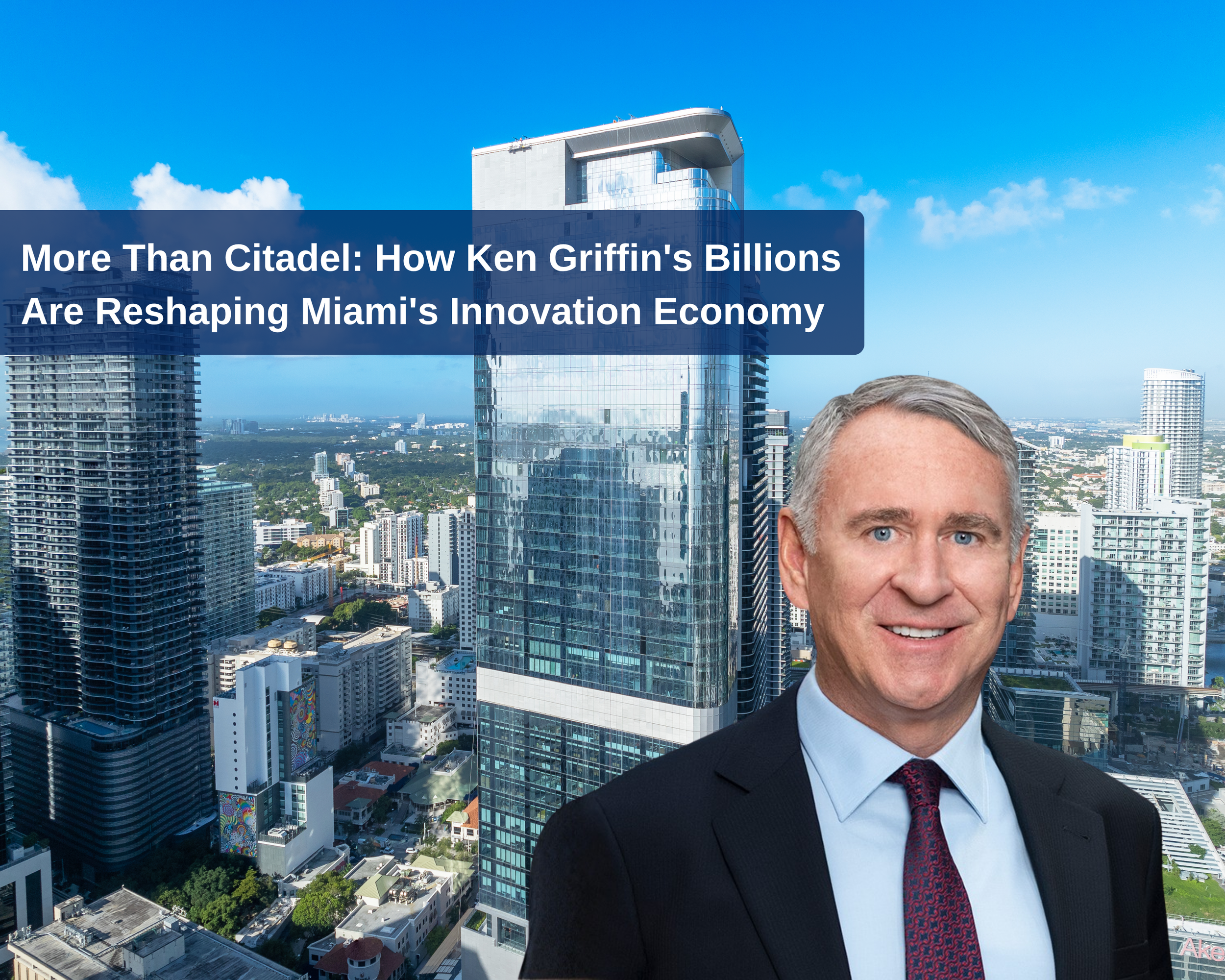



Miami-based Blackstone technology executive Emma Mazzeo has joined Lutheran Services Florida's board of directors alongside two accomplished leaders in education and child welfare, bringing new expertise to the statewide nonprofit.